These Last Five Books

Due to a recent, personal setback, I have neglected to blog about the last couple of books I’ve read. According to GoodReads, I’m still on track to read 52 books by the end of the year if I read a book a week. Since I’m trying to read at that pace, I don’t want to back-track to write blogs for the last five books I’ve read on top of the ones I’m currently reading. So, here’s my thoughts on the last five books at a speed-dating pace.

Image result for refresh murray

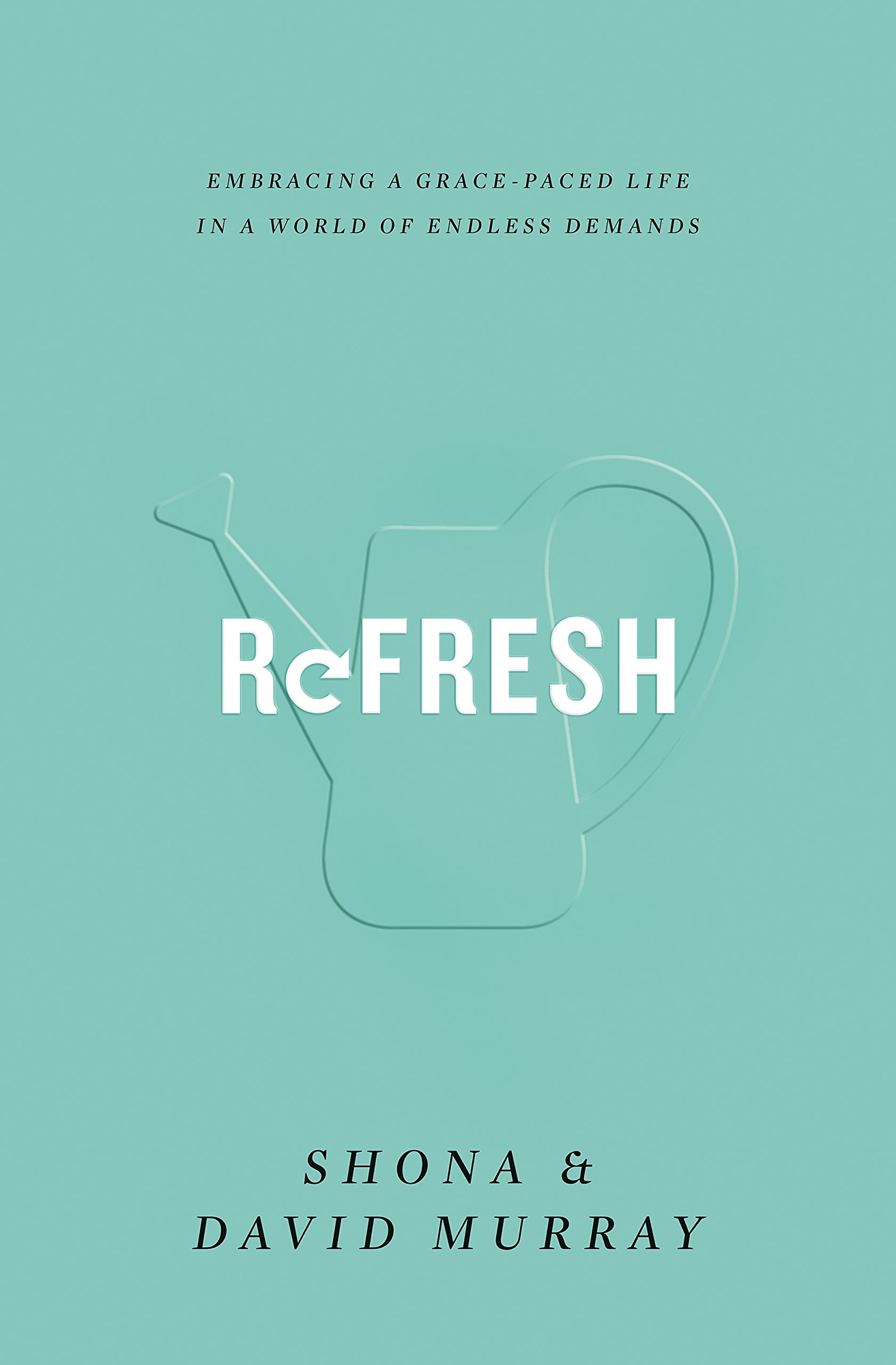
Refresh by Shona and David Murray
While on a weekend retreat with my Bible Fellowship Group from church, Logan and I won a set of books by Shona and David Murray. ‘Refresh’ is for women; ‘Reset’ is for men. These books sprung from the Murray’s personal experiences with burn-out and function as prescriptive advice for others to both avoid and recover from our own burn-out. Though Shona shares her own experience with burn-out, I do wish the book was clearer about its purpose. She says this book is for anyone on the spectrum from anxious to suicidal, but in reality, it’s for those on that spectrum as a result of burn-out. Many with depression or suicidal desires have a different cause than burn-out and may need different kinds of help or therapy. For those who have felt stressed out, worn down, run ragged, or any other two-worded way of saying “exhausted,” this book offers help strategies grounded in both Scripture and science.

Image result for dress your family in corduroy and denim

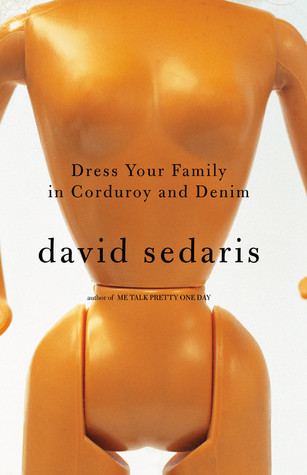
Dress Your Family in Corduroy and Denim by David Sedaris
In my undergrad studying creative writing, Sedaris’ name was spoken reverently, and the excerpts I read stuck to my mind more than most memoir pieces. The audio format for this book is the first time I’ve heard of an audiobook being nominated for a Grammy. I know I’m more describing the reception of Sedaris’ work than I am the work itself, but that’s mostly because it’s hard to describe his stories. I prefer to let him do it. He’s labelled as an “American humorist,” and much like a Bo Burnham sketch, I’d do it a grand disservice to try to summarize the whole thing or even repeat a bit. Each chapter in this collection details another angle of his odd family life. I had Logan listen to a few chapters, as it was too funny to listen to alone. I highly recommend the audiobook (read by the author) if you can get your hands on it.

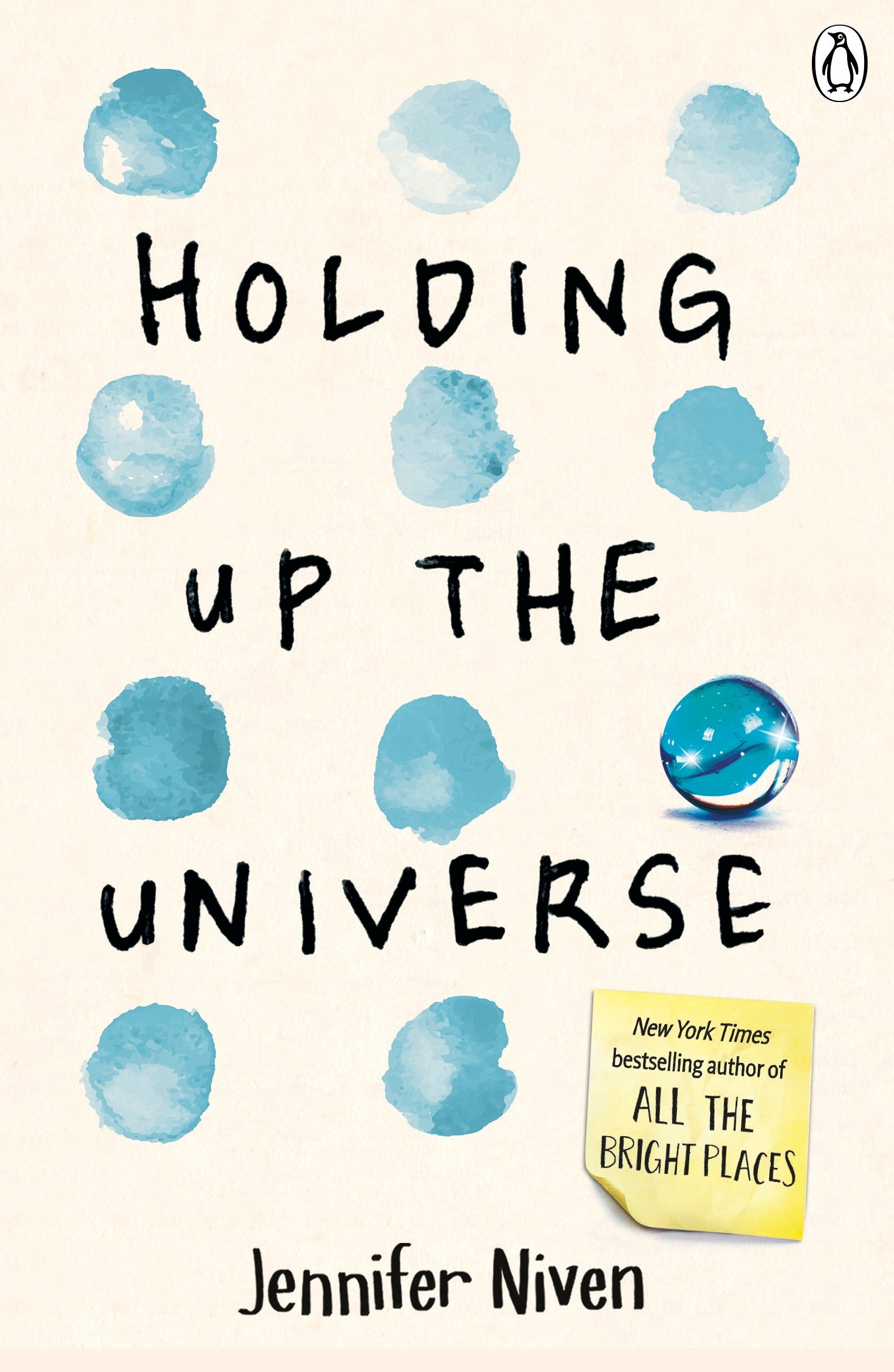
Image result for holding up the universe

Holding Up the Universe by Jennifer Niven
One of the most interesting things about this book wasn’t in the synopsis on the back and yet was introduced on the first page: a main character with prosopagnosia (face blindness). I’d never considered the implications of such a disorder before, but Niven did her research before giving Jack Masselin the character trait and letting us see the world through his eyes. The other first-person perspective in this YA novel is Libby Strout, a high-schooler who has overcome childhood obesity getting cut out of her own home years before. Though she’s lost hundreds of pounds, she’s still one of the biggest girls in the school when she re-enters for her junior year. This book was honestly perfect for a YA novel. The well-written characters change in inspiring ways, and though the end of the book changes their lives permanently, it doesn’t change much of the world around them. I was pleasantly surprised by how grounded this book was while also letting me believe in something wonderful.

25802615

Unashamed by Lecrae
Lecrae’s memoir was ChristianAudio.com’s free book of the month. I’ve been following his career for a while, but as I listened to the first few chapters dig into his early childhood, I realized I didn’t know his story at all. Yet the picture of all that he went through was not as poignant to me as the story after his conversion. We often hear of sinners converted and leaving the past behind for a new life. We don’t hear about converts relapsing, reverting, or returning to the same way of life they thought God had freed them from. Lecrae’s story is important in a culture that often idolizes spiritual highs, leaving those in spiritual lows alone in the dark. The last third of his book also explains his approach to making music as a Christian, as opposed to making Christian music. The dilemma of using art to engage culture as a Christian is a topic handled by many Christians, but I’ve never heard it discussed by someone actually applying what they believe. It’s a tricky topic, but I appreciated his approach. The prose to this book is simplistic, but I think that’s intentional and doesn’t detract from the five stars I gave it on GoodReads.

29753111

When Michael Met Mina by Randa Abdel-Fattah
This one’s hard to read, but not due to bad writing. Michael’s from a family that’s created a political movement to oppose refugees from coming to Australia; Mina’s an Afghani refugee standing on the other side of the picket line. It felt like a take on Romeo and Juliet, and honestly, it worked. It was hard to read about Michael’s family, however. To sit in that home and hear the things they say, even without hatred, took some patience. Though the political movement they represent is fictional, I’ve heard their ideas actually stated by those in my own country. I felt my ire rise. So, naturally, I empathized with Mina’s pain (though we don’t have the same background) and honestly teared up with her near the end when she found some hope and relief. For a YA novel that covers serious issues, I’d recommend picking this one up.

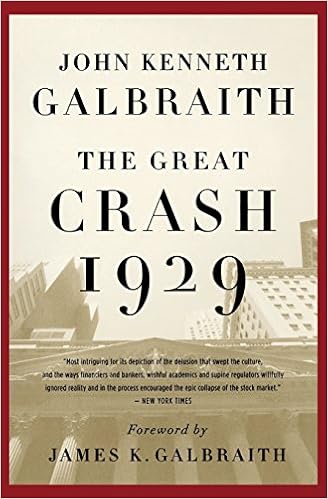
The Great Crash, 1929 by John K. Galbraith

By Logan

Begun 03/03/2019, Finished 03/20/2019
6 Hours 43 Minutes

Image result for The Great Crash, 1929

When I started The Great Crash, 1929  there were a number of things that I did not yet grasp.  First, I did not realize how prominent of a scholar the author had been.  I didn’t realize this even after reading the book. I only noticed several days later when, by chance, a notable current-day economist referenced him.  A Google search later revealed that John K. Galbraith was a long-time Harvard professor and significant figure in 20th Century economics. In a way, I’m glad I didn’t know this beforehand because it might have ruined a charm of the book for me, for reasons I’ll explain later.  Galbraith wrote over a thousand publications in his career, with many books on economics and economic theory.

I also didn’t have the strongest grasp on the timeline of the Great Depression.  I had an especially hard time recognizing the series of events that led from the Roaring Twenties into the Great Depression.  I knew the details well enough to have passed muster in front of my prior teachers and professors: that a way of buying stocks more cheaply, “on margin,” around the end of the 1920s caused a very serious stock market collapse that, because most people were heavily involved in it, managed to drag the whole economy down somehow into a decade of bad times.  Other than that, I couldn’t have told you much. I only later would see how grossly oversimplified my understanding had become.

Like any good public scholar, Galbraith begins his detailed look into the nature of how speculation, regulatory apathy, and the indefatigable rush of believing in, “good times,” led to the stock market crash which preceded the Great Depression with a case study.  He looks to Florida, where in 1927 and 28 there was a land speculation bubble which encapsulates a few essential aspects of what speculation and its inevitable child, collapse, look like.

In Florida, a prolonged period of increases in the price of land occurred.  People began to buy even land which was entirely useless for any commercial activity on the basis that they believed it would continue to increase in price.  To reduce the burdens of ownership to make speculation more profitable, new ways of owning land were devised in Florida. One prominent one was buying the right and obligation to buy land at a certain price.  The end result was a massive inflation in the price of Florida land, which early in 1928 readjusted to reasonable levels, resulting in hard times for many people connected to the market, hard times which paralleled what was to come for the entire country.  This example also draws attention to an important fact: in bubbles of speculation, the actual pragmatic value of the commodity being speculated on is entirely unrelated to its price in the market. For the speculator, the only determiner of price is the likelihood of the commodity in question increasing in price while in his hands.  The radical separation of the price of a commodity from its actual productive value is a key feature of all crashes.

The Great Crash, 1929 gives a lot of attention to a lot of details of the circumstances of the crash prior to the Great Depression.  While reading it, I felt deeply frustrated with the reticence of the Board of Governors of the Federal Reserve, who likely had the necessary information to caution speculators, but caved to the pressure from many different sources not to disturb the good times of increasing prices and resulting wealth.

A member of the Hoover administration is quoted as saying that they found it plausible that the country was well on its way to eliminating poverty altogether shortly before the crash.  This optimism is a central part of the Galbraith’s diagnosis of where the crash originated. Run away speculation builds a pretended wealth on the guarantee that times will continue to be good and the commodity being speculated on will continue to increase in price indefinitely.  Galbraith quotes a commentator at the time who thought that the increase in stock prices would also increase indefinitely. It was the assumption of continued good times which enables men to make increasingly foolish decisions with the goal of their implausibly continued prosperity.

Galbraith finds this kind of optimism to be the exact thing which is required to create a speculation bubble and subsequent crash.  He speaks critically of those who assert that speculation must run rampant whenever there is easily accessible credit. He in fact points to numerous counter examples of times when credit was cheaper than in 1928-29 without causing a massive ramp in the market.  Galbraith assesses that the key ingredients, rather than credit, are plausibly good times and forgetfulness. He notes dryly that every major crash, and the American economy has had several, occurs far enough apart for the people involved to have forgotten the lessons of the one prior.  That speculation is dangerous and that regulation is needed to curtail its consequences is apparently an easily forgotten lesson.

A feature of the crash which began to stun me was the complete and utter lack or regulatory infrastructure which existed to prevent it.  Not only were the watchers on the wall lacking in the courage necessary to make a warning which could undo the illusion of endless prosperity before there was a great deal of harm, but the Hoover administration was also loathe to intervene.  This was not, as might be expected, out of pure fondness for free markets, per se. Hoover had no particular love for speculation. Rather, Hoover held certain disdain for speculators and preferred to see them come to their own ends, whatever that may be.  That Hoover imagined the economy would be unaffected and that he held a desire to not involve the government too deeply in affairs of the common people were largely incidental. Other vehicles by which the crash could have been avoided were idle on more purely laissez-faire grounds.

The lack of regulation combined with the feelings of good times to produce a staggering number of economic inventions.  The most interesting of these was surely the stock company. These firms had no business other than to buy stock and sell stock of their own to consumers.  These were marketed as a means by which regular consumers could get into the stock market game without having to devote a great deal of time and resources to knowing how the market worked.  Instead of buying stocks themselves, they could buy the company which bought the stock. These companies at various points in the late 20s were springing up by the day. These often had dubious claims to solvency, but because of the lack of oversight of them, this trouble was usually discovered only after the Great Crash.

Debt is another feature of great and recurring significance throughout the book.  Debt played a number of roles in producing the long bull market prior to the crash, causing the crash to happen, and in causing the effects of the crash to be felt throughout the economy.  Speculators used debt as a means of lessening the burdens of ownership of the commodity in which they were interested. By securing loans from their broker for up to 90% of the cost of their stock purchase, investors were able to purchase a great deal more of stock than they could reasonably afford.  Only the stock itself was required for collateral, so long as its value remained above the loan amount. When the stock inevitably doubled or tripled in value, it could all be sold, except for the smaller amount of stock at much greater price required to serve as collateral for the loan. Then, ten times or more of stock could be purchased on a new marginal loan.  In this way, virtually everyone involved in the stock market became heavily indebted, or leveraged. This constant buying resulted in rapidly increasing prices of stocks, and thus a creation of a lot of money for those who participated in the market.

Until it took all of the money back.  Debt not only enabled the unprecedented rise of the stock market; afterward, it made the inevitable crash much, much worse.  Galbraith records the chilling process step by step until the massive inevitability and danger becomes finally apparent. After some arbitrary and random, but small and otherwise harmless and probably short-term, downturn happened, the prices of a large number of stocks no longer were of sufficient value to serve as collateral for a margin loan.  This resulted in broker calls to clients, saying they needed other collateral or to pay off the difference in the balance immediately. Worried clients sold off other stock to make up the difference. Mass sell-offs of commonly held stock resulted in further decreases in prices, which resulted in more calls, which resulted in more sell-offs. Over the course of a few months, this process occurred some eight times, each time eventually being stopped by a closing of the markets, or some other initiative.

Finally, debt made the consequences of the crash resound throughout the economy.  Despite Hoover’s assurances that the essential principles of the economy were sound, there were already signs of a troubling slowdown in consumer purchasing.  This was masked in its impact upon wages and employment only by the increase in the purchase of luxury goods at great expense, such as cars and boats, by the investor class.  However, these investors had just lost a lot of money. Many of them lost their principle incomes. This combined with large firms who normally sold consumer goods having also invested in the market and taking severe losses to result in substantial layoffs and price-decreases throughout the country.

This is now the second book I have read which links large debt to great catastrophes in American life.  The first was Edward Baptist’s The Half Has Never Been Told.  It spoke of a great economic crash caused by a slaveholding public optimistic that the prices of slaves, cotton, and land were only ever bound to increase.  Because slavery-based farming was eternally thirsty for more capital, this optimism led to increasingly convoluted packages of markets of debt and interconnectedness which, when the price of cotton inevitably fell, nearly shut down the entire American and British economies in the 1850s.  The lack of regulation by any state or the federal government in the creation of new debt, the short term economic good times thus created, and the brutality of the result of those times ending were all brought to my mind when I read this book.

For the second time, parallels to 2008 present themselves.  Indeed, since so little has changed about our economic situation (the dreadful science of economic engineering continues unabated, the stock market continues to play a very  important part of many people’s lives, and seemingly everyone is in great debt) that it feels as though I am reading something specifically meant to warn our current moment. Debt and deregulation seem to be ever at the fault of the country’s economic woes.  I do not think it is insignificant that those economic problems, always caused by debt and libertine approaches to wealth, are also always associated with some evil. Slavery speaks for itself. Reinhold Neibuhr, a theologian concurrent with the Depression, wrote prior to it about the injustices being created to prop up the increasingly lavish lifestyles of the Roarin’ 20s. (Interestingly, Martin Luther, the great Protestant Reformer, wrote more than once that speculation itself was inherently unjust act because it necessarily involved buying something at less than you believed it was worth and thus making a decision with apathy, even disdain, for the good of your neighbor.)  The crisis in 2008 was caused by predatory loans made to the unwitting poor. It seems that whenever moral punishment is due to a society, debt and more freedom are easy ways to ensure that the punishment comes in due time and stings deeply until the lesson is forgotten. This trend, which I have discovered unwittingly, having not sought it out, is enough to discourage me from any real debt, even had I not grown up listening to Dave Ramsey on the car radio.

That is not to say that all trust in greater powers is good.  In fact, Galbraith also traces the tendency across these years for people to trust that, “they,” were in charge of the whole process.  Who, “they,” were is unclear to the reader because it is unclear to those who trusted it. It was assumed, when prices were rising, that some mixture of the government, the banks, and the great titans of industry, were all collaborating to see the market rise substantially for some interest or other of their own.  Thus, it was the little man’s best odds to trust that, “they,” would keep increasing the market and get in on it himself. Likewise, when the market crashes happened, newspapers regularly spoke of expecting, “organized support,” for the market which would come from, “them.” This support, of course, never materialized.  Despite a few clever interventions, the market did inevitably collapse. It had to collapse. The market’s rise was not based on the increasing value of the companies, but in the belief only that owning the stock itself would become more desirable based on eternally increasing prices. Had, “they,” existed as a single body of influence in the first place, “they,” would have been ultimately powerless to make any real difference.  The lesson seems to demand to be learned: even the most powerful interests of the most powerful people is insufficient to countermand reality.

I enjoyed reading Galbraith’s account of this era of American history.  It is, of course, a very narrow slice of that history, ignoring virtually every aspect of not only the broader culture but also the economy which did not directly contribute to the Great Crash.  In exchange for this narrowness of scope, the reader receives an excellent depth of understanding and material. I feel as if I not only understand a previously murky event much more clearly, but I also have paradigms with which to understand economic occurrences in American history much more readily.  If either interest you at all, I strongly suggest you pick up a copy (or rent the audiobook from your local library, as I had the pleasure to do.)
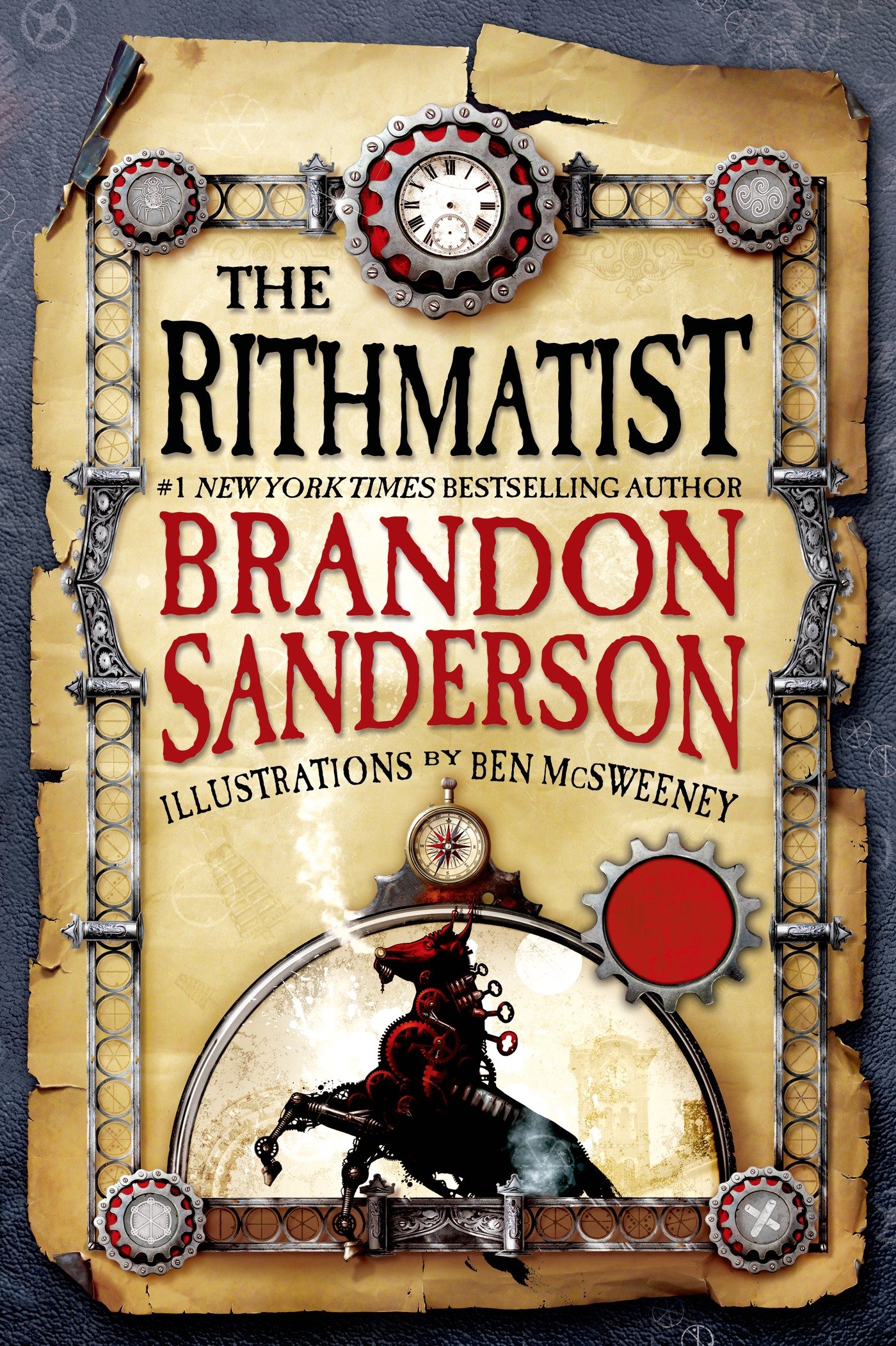
The Rithmatist by Brandon Sanderson

by Tori

Begun 3/7/2019, Finished 3/19/2019
375 pages

Image result for the rithmatist

You’re either a Sanderson fan, or you’ve never read him.

Everyone I know who’s read his stuff has turned around and recommended it to me instantly. In the case of this book, a friend literally put it in my hands, knowing I’d want to borrow it. I’ve also never gotten as many comments from strangers in public about what I’m reading as I do when I’ve got a Sanderson novel in my hands.

While he typically writes high-fantasy fiction, he has a lot of side-projects from his main series (series here is plural as he has quite a few “main” ones). The Rithmatist is a YA novel with one of the most intriguing setup I’ve ever heard: a Hogwarts-esque school for magic and non-magic folk in a steampunk culture set in the United States, if the U.S. was spread across a collection of islands.

Image result for the rithmatist

The magic in this world consists of two-dimensional chalk drawings that can come to life. Sanderson’s strong suit is always his magic systems. He has a very specific philosophy for writing magic.

Sanderson’s First Law of Magics: An author’s ability to solve conflict with magic is DIRECTLY PROPORTIONAL to how well the reader understands said magic.

Unlike Rowling’s approach to magic (long live the queen), Sanderson’s magic has clear limitations and established abilities. That’s not to say that the entire system is laid bare for either the characters or the reader; even in this book, the characters are still exploring this “new” magic and acknowledge they don’t know everything.

A difficulty in a lot of fantasy or sci-fi is revealing the world to the reader. My sister just read Dune and said the book does little to explain itself, so it takes a while to understand what’s going on. Most authors have a character who’s teaching the protagonist about the world, like Hermione in Harry Potter. In The Rithmatist, Sanderson has the main character, Joel, actually play this role with a twist. He’s a non-magic user in a magic school. He’s obsessed with the system and sneaks into magic classes to learn more.

I have to admit that quite a bit of this system was lost on me, no matter how often Joel fanboys over it. There’s a math-y visual element that I struggled to hold in mind when reading about the duels. Thankfully, the book is full of visuals and illustrations, to the point that the illustrator’s name is on the cover. Inserts between chapters cover various defensive maneuvers and any chalk creatures are shown within the text.

The book’s pacing hit that sweet spot between building momentum without rushing through scenes and plot. A serial killer (or kidnapper) has been taking children, and the plot is essentially a fantasy “whodunnit.” Once I got to about 2/3 of the way through, I felt too hooked to put it down and finished it within a day. I didn’t feel hungover after I finished either, as can often happen. I just felt satisfied and ready for the sequel (which is not written yet).

As usual, the characters were well-developed. Joel’s know-it-all attitude could’ve been a problem, but it’s gently and effectively rebuked by a caring teacher. I found his friend, Melody, relatable to an uncomfortable degree, though descriptions of her personality weren’t always flattering. Every character felt three-dimensional enough so that the big reveal at the end genuinely took me by surprise. For someone who can rarely turn off analyzing while reading, it’s always pleasant when an author can hide the answer in plain sight.

Of course, I recommend this novel, but if you know me or Logan, you didn’t have to read to the end of this blog to guess that.

Absolute Surrender by Andrew Murray

by Tori

Begun 3/15/2019, Finished 3/17/2019
127 pages

Andrew Murray was a prolific author and missionary, born in 1828. In the 19th Century, he helped establish a few parachurch organizations in South Africa’s Dutch Reformed churches. His biography is full of energy and zeal, both of which pour into “Absolute Surrender,” written in 1895.

Free Audiobook of the Month


This book reads like a sermon you’d hear recited by a minister in a Jane Austen novel. The language is rich with 18th Century phrases like “verily” and using “want” to mean lacking rather than desiring. The content, however, is enriching and still appropriate. In the short nine chapters, the title is repeated forty-five times. Much like R C Sproul’s “The Holiness of God,” this work feels like a meditation on every angle of one thing, and Murray’s thing is the Christian’s complete surrender to God.

To an American millennial like me, the concept of surrendering myself chafes. A lot of my self-worth comes from carefully cultivating my self-concept. Now, the surrendering God asks of us doesn’t throw our uniqueness out the window, but it replaces our selfish (or self-oriented) will and desires with God’s will and God’s character.

Murray doesn’t make that distinction. He was born in South Africa and spent his life teaching and preaching there. When he tells readers to empty themselves like a cup poured out, he doesn’t pause to say, “Don’t worry. You’ll still be you.” Instead, he dives into the image and paints a thorough picture of our perfect nothingness, ready to be filled with God:

Oh, become nothing in deep reality, and, as a worker, study only one thing—to become poorer and lower and more helpless, that Christ may work all in you.

He also spends some chapters describing how we are filled and with what we are filled. A theme of love is developed in the second chapter and worked through the rest of the book. Love is God’s will for us and what He purposes by our surrendering and His filling us up:

I will not learn it until I realize that “God is love,” and to claim and receive it as an indwelling power for self-sacrifice. I will not love until I begin to see that my glory, my blessedness, is to be like God and like Christ, in giving up everything in myself for my fellow-men.

I did struggle to maintain focus often in this book. I don’t know if it’s a product of my personality or the time period, but I struggle with prose that stays largely in the concept’s abstract without coming down to the concrete. For example, in Sproul’s book which I mentioned, he frequently gives examples from his own life or ties an idea to a relevant example. Murray stays in the abstract, for the most part, developing the idea in the thought realm rather than in specific scenarios.

Still, it was an enjoyable book, a healthy reminder of our true purpose as Christians. The directive to surrender all is also a comfort. If Jesus is the vine and we the branch, then the responsibility for fruit is not on us. Our only task is to submit fully to the vine and let Him produce works through our submission.

On GoodReads, I gave this book three stars because it’s not my preferred style of writing, but I would still recommend it, especially if you struggle like I do with self-interest.

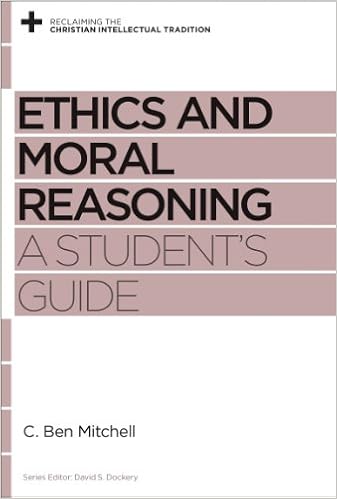
Ethics and Moral Reasoning: A Student’s Guide by C. Ben Mitchell

By Logan

Begun 02/02/2019 Finished 03/03/2019
111 Pages

Image result for ethics and moral reasoning c. ben mitchell

I’m glad to get to finally add one of my books for class to this blog and my list of books for the year.  Reading books for class is an odd occupation when in pursuit of a goal like what Tori and I are attempting here.  The method of class reading, in which sections of a book are read slowly across a month or two, does not translate well to the pattern of books implied by attempting to read a book and then write a reflection or review on it.  C. Ben Mitchell’s Ethics and Moral Reasoning did not get the attention it deserved from me, as a result.  None of the other books which are added because of my coursework at SBTS will, either.

That said, Mitchell’s short summary of Christian ethics is an enjoyable read and likely would prove very useful for anyone attempting to take their first dives into the field of ethics, Christian or otherwise.  This is precisely its goal as an entry in the Reclaiming the Christian Intellectual Tradition series, which seeks to introduce Christian students and teachers with the philosophical ideas which have been related to Christian thought across its long history.

Ethics and Moral Reasoning begins by establishing the need for it with an attack on, “relativism,” Mitchell’s label for the  sense in modernity that trying to actually determine what is good and bad is a waste of time and that instead we should think of morality in terms of, “right for you,” and, “wrong for me.”  After examining the logical bases for this way of thinking about ethics, Mitchell dives into the task of elucidating the broadest contours of a distinctly Christian ethics. He does this by first showing the relationship between the ethical statements of the Old and New Testament and the ethical thought of the broader Ancient and Medieval world.  He proceeds on a brisk tour of modern Western philosophy, surveying the ethical thought of Kant and Bentham and Mill before noting favorably the arguments of Virtue ethicists in recent decades against them. Finally, he overviews the best of Evangelical ethicists of the past century before setting up general guidelines for those who themselves do the work of discovering right and wrong in the world.

Mitchell’s work is an excellent, though perhaps too brief, introduction to ethical philosophy and theology for those unacquainted with these ideas.  It also serves as a handy list of names who should be read and wrestled with if one wants to engage seriously with what it means to live as a follower of Christ in a world with ethical decisions to make.  I found the penultimate chapter by far the most enjoyable, no doubt because it was the chapter with the most content that was new for me, personally. Getting succinct summaries and a few excerpts of the great thinkers like John Murray, Carl F. Henry, Arthur F. Holmes, the now virtually preeminent Stanley Hauerwas, Oliver O’Donovan, and Gilbert Meilaender was fascinating and novel.

This book is at times too compact and risks oversimplification of the ideas that it presents, but for Christians looking for a quick way to get into ethical thought, especially those who are young, it’s definitely the right tool for that job.

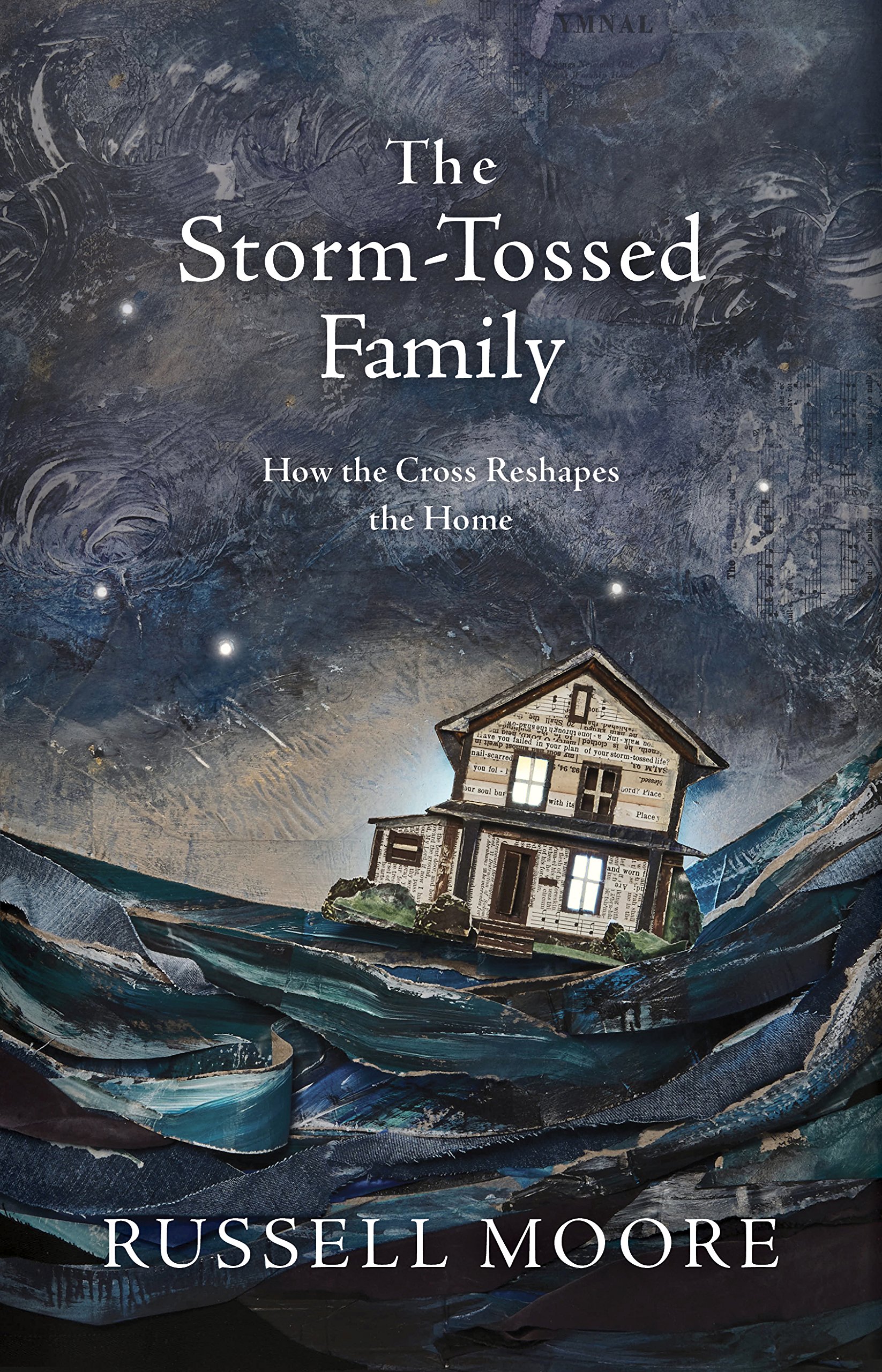
The Storm-Tossed Family: How the Cross Reshapes the Home by Russell Moore

by Tori

300 pages
Begun 2/07/2019, Finished 3/07/2019

In my post about the graphic novels Boxers & Saints, I said I often judge how good a book is by how much I worry about the characters. I think a good measure for nonfiction is how much the argument or information haunt me afterward, shaping my thinking and challenging my worldview. By that measure, The Storm-Tossed Family gets five stars from me and a prolonged shelf-life in my conscious thinking.

I’ve been a fan of Russell Moore for a while, and when this book came out last year, I quickly added it to my to-read pile. The topic was particularly apt for me as my family’s been going through a hard time, and I also co-founded a new family when I got married last May.

Yet a point Moore makes is that the topic of family is apt to all of us. We all start in a family, even if it’s broken, and we all live in one, even if they’re far apart. For the Christian church, especially, family is a tricky matter. In many Christian circles I’ve been a part of, family is put on a pedestal with some assumptions: we’re entitled to a good family, and so long as we’re in church, we’ll have a perfect one.

First, Moore challenges these false assumptions: “To make it through, we must recognize why family is important to us, and why family can never be ultimate to us. We must see the family clearly, but we must see beyond it. The only safe harbor for a storm-tossed family is a nail-scarred home.”

The idea of seeing “beyond” family is a simple one to repeat. It’s in the title of this book. To see beyond family is to see God’s purpose for family. Moore starts with a new assumption: “All of us are failures at family.” The cross itself says as much to us. There is no need for the cross where there is no sin or brokenness. And yet, it’s by the cross that Jesus saves us, and it’s the cross that we proclaim to cling to.

So, what does it mean to view the family through the lens of the cross? Well, that’s what he spends the rest of the book unpacking. He spends a few chapters first discussing the family a bit broadly before he then analyzes the various dynamics within a family: marriages, divorces, births, parenting, extended family members, and those who are aging.

Family teaches us that we need Christ because of our failures and others’ failures to us, but it also shows a beautiful portrait of our relationship with God, both through marriage and through parent-child relationships. Moore unpacks God’s design in both of these areas, detailing the stresses and also the blessings.

Every chapter was convicting in different ways. As a newly wed, I was, of course, particularly interested in the two chapters on marriage. Reading them were instructive for my marriage and also stirred me to my husband. Moore’s views of marriage are higher than mine, not because he has a higher standard of perfection but because he shares a clearer picture of what God wants to teach us through the tension of marriage.

In one section on marriage, he described a husband staying his wife through dementia, when she’s forgotten her spouses name, as a moral imperative. Even dementia, to him, is not grounds for divorce. I’ve decided Logan is never allowed to divorce me without Russell Moore’s strict permission.

An unexpected yet pleasant element of this book is how often I laughed out loud. I deeply enjoy humor, but I very rarely laugh while reading. Yet for this one, I frequently paused to laugh and reread a section to my husband.

This book is relevant to everyone in the church, even to the single members. God is doing something intentional through family, and His designs for us are for our good. However, Moore makes an important distinction, “Family is not the gospel. If you think family is the source of ultimate meaning in your life, then you will expect your family to make you happy, to live up to your expectations.” Jackie Hill Perry makes a similar point that the gospel is also not about heterosexuality, a mistake we make when preaching to the homosexual community. We often mistake God’s symbols and designs for God’s goals. Marriage and family are meant to point us back to Him; they are not the goal of the gospel.

Over the month I read it, I shared quite a few quotes from this book with my sister, Caroline. She noted eventually, “Sounds like he’s just describing how to be a healthy family.” I would say she’s probably right. This book isn’t full of any new ideas exactly. It’s a much-needed redirection in a culture often mixed-up on family be either idolizing or demeaning it. The path Moore wants to redirect readers to is the cross:

Your family might bring you pain. What of it? To love is to suffer. But you have learned that suffering is not a sign of God’s absence but his presence. You learned that at the Place of the Skull. You learned that when you first heard the words calling out to you, from somewhere on an ancient Galilean shore, “Take up your cross and follow me.” Do not be afraid. Your family will lead you where you never expected to go. But this is no reason for fear. The path before you is the way of the cross.

The way of the cross leads Home.

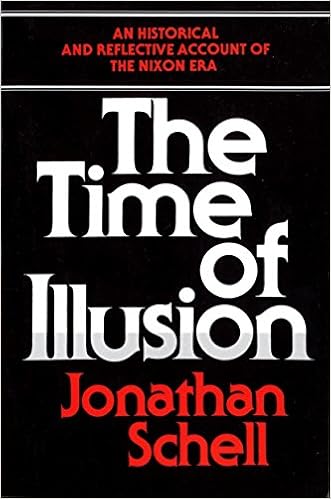
The Time of Illusion: an Historical and Reflective Account of the Nixon Era by Jonathan Schell

By Logan

Image result for the time of illusion schell

Jonathan Schell’s The Time of Illusion is a peculiar book written in response to a peculiar era of American history.  Unlike virtually any attempt to discuss the Nixon administration which might be published today, it spends remarkably little time actually discussing Watergate and Nixon’s subsequent resignation.  It receives a paragraph in the fourth chapter, it interspersed with other material such as Nixon’s re-election campaign in the first and larger portion of the fifth chapter, and receives only 30 or so pages of focused attention.  This neglect of what is for many perhaps the only detail of the Nixon administration they know is not an artistic flair. The book was published in 1975, one year after Nixon resigned on public television. Instead of devoting attention to details that almost certain everyone reading it at that time would have more than familiar with, Schell recounts the Nixon administration with an eye towards tracing the less high-profile, but much more horrifying, secret war waged by President Nixon against the constitutional system of the United States.  In doing so, he attempts to explain how and why the crisis had happened, with particular emphasis on geopolitics, leaving modern readers with much more understandings of the era of American history than they likely would have before and ominous patterns within which to read present history.

Schell’s account of what the Nixon administration did is uncanny in its narrative cohesion, but at the same time deeply troubling.  The majority of the book is a simple chronological recounting of the Nixon administration’s secret actions and reasonings. This was made necessary at the time of its publication by the fact that the public became privy to most of these events years after the fact and almost always out of order.  It was necessary for me because, despite the fact that I thought I was largely proficient in my knowledge of American history, for a layman, I knew almost none of the facts of the administration, except in the broadest of senses.

From the beginning, the Nixon administration set to separate reality from appearance.  Nixon was elected in 1968 on a platform of healing and unifying the division the country had faced during the Johnson Administration and public outcry against the Vietnam War by decentralizing power away from the White House and by ending the war.  Schell records that almost immediately after his inauguration Nixon began to enforce a new kind of secrecy. While promising that he would soon withdraw troops from Vietnam, he began a very intense program of bombing in Cambodia in such secrecy that it effectively created a second, covert chain-of-command in the U.S. military.  Instead of reporting to people who the Nixon administration did not trust, he had those in charge of this program report directly to his White House. This duplicity extended into warrantless wiretaps pursued by giving commands to the CIA that avoided all of the normal procedures established in protection of the Constitution. It also prompted him to shape his domestic proposals in illusory ways.  To quote Schell, “In [the administration’s] civil-rights policy, the Administration presented a conservative program as a liberal program. In its crime policy, it took actions that it knew were futile in order to create an appearance of effective action and to transfer the blame for inaction to the political opposition. In its welfare policy, it presented a liberal program as a conservative program, and the image was so convincing that the liberals joined the conservatives to defeat the program.  But whether [it] was saying one thing in public while doing the opposite in secret or was saying one thing in public while doing the opposite also in public… the one constant was that it had broken the unity of word and deed which makes political action intelligible to the rest of the world.”

After attention swung back to the ongoing War, however, Nixon’s public image changed, and he began an offensive against the press, demonstrators, and the nebulously defined, “elite.”  Schell uses numerous quotes from internal memos and public speeches to document Nixon’s deep frustration with forces which he saw as attempting nothing less than the castration of the Presidency.  Among the other elements of the, “Presidential Offensive,” were ambiguously legal covert actions to infiltrate and subvert domestic anti-war organizations, attempts to threaten news organizations which didn’t supply adequately favorable coverage to the administration, and Spiro Agnew’s bold and brazen diatribes against, “effete snobs,” who he claimed were out to destroy the institutions of American governance.  Behind these actions were a deep conviction that the elements of public life that were against the war and critical of the president were dangerous to the continued functioning of America.

Since this, “Presidential Offensive,” is the seed which gave life to virtually all other crimes of the Nixon White House, it’s worth examining Schell’s explanation of where it came from.  In his last chapter, Schell connects dots that appear throughout his accounting of the Nixon era. He argues that you cannot fully understand the Nixon era without understanding how the doctrine of Credibility and the Vietnam War intersected.

Credibility emerged in the late 1950s as an academic idea from a number of top theorists of military and geopolitical policy.  It attempted to deal with a paradox inherent to the possession of nuclear weapons: the incredible efficacy and horror of using nuclear weapons meant that they had to be reserved for the most dire of conflicts.  It also meant that conflicts which could escalate into the use of nuclear weapons had to be avoided. The fact of the USSR’s nuclear arsenal also ensured that the use of nuclear weapons would be functional suicide.  To deal with this, Henry Kissinger and others proposed an idea of limited war, small, aggressive military actions taken for some aim or another that would convince the world, both America’s allies and her enemies, that the US had the will to use the full weight of its power if challenged, with the result hopefully being that such a display would never prove necessary.  In effect, it was an attempt on the global stage to separate appearance from reality, to cover the unusable nature of nuclear weapons with the most intense displays of willingness to use all other weapons.

Schell draws a persuasive line that this notion of Credibility not only was the actual cause of America’s entry into and persistence in the Vietnam War, but was the background of all of Nixon’s actions on the domestic front.  He quotes numerous speeches and statements in which Nixon seems to fear a kind of castration by those who would restrict his actions. This included war protestors, for certain, but also included Congress, the press, and a figure of his imagination which he frequently referred to in private as, “the establishment.”  Because the President of the United States was the center of American Credibility, from Nixon’s view, any constraint on himself was tantamount to a threat to not only the entire country, but all of humanity.

The consequence is that even while Vietnam continued on into his second term, Nixon’s real war was entirely domestic.  Because the war of his interest was here, so too did the weaponization of illusion follow it. Schell shows how every action, from the timings of announcements of bombings in Vietnam to detente, from Supreme Court nominations to regulations on the production of milk were tactical moves made to shape and then conquer a battlefield of public relations and appearances.

Reading Jonathan Schell’s account of the Nixon era was illuminating.  In pages of this book are details of the Nixon era that I was not taught.  Watergate was a problem for Nixon not because he was connected to a burglary of the Democratic National Headquarters, but because the elaborate infrastructure he used to have this burglary performed had been in place for years to covertly accomplish every kind of crime including assaulting an Editor of the Washington Post, placing illegal wiretaps, and performing similar burglaries of the primary election candidates for the Democratic nomination in 1972.  Watergate becomes a sort of sad anti-climax when it is appended to the far more intense and intimidating threat to the democratic foundation of the country that occured in the late ‘60s. In fact, Watergate, rather than a scandal, becomes the saving grace preventing the permanent settlement of another, much more heinous and horrific scandal.

The blood-curdling aspect of Schell’s account of this attempted coup-from-the-top is the nation’s apathy.  The constant barrage of changing tactics, swings in decisions, and self-contradiction quickly left the country fatigued even beyond what had been the case after years of Vietnam protests in the Johnson administration.  There were hints of the trouble long before Watergate, but few attempted the sound the alarm because the appearance of such charges being partisan slander instead of dangerous truth made few willing to take the risk. Those that did were barely cared enough about to be shouted down, let alone listened to.  If the portrait of Nixon and his fellows during this era is nefarious, the mirror this work holds up the character of the country is deeply unsettling as well.

This is an old book that is broadly available online in paperback.  If you have any interest in the behavior of the powerful, American history, or Presidential politics, I strongly recommend you give it a read.

Is Everyone Hanging Out Without Me? (And Other Concerns) by Mindy Kaling (Tori)

By Tori

222 Pages
Begun 02/15/2019, Finished 02/17/2019

This image has an empty alt attribute; its file name is 51ixsUsMYiL._SX322_BO1,204,203,200_.jpg

I tricked my husband into reading this book. I say “reading,”but I mean listening.  When I described the book as an option for an audiobook on our trip to visit his parents recently, he said it didn’t sound like his kind of book. A memoir about a girl who wonders if everyone is hanging out without her and some meditations on boys and body? Yeah, I suppose the dust jacket would deter most guys. Yet as I played it on the drive as “background noise,” it didn’t take him long to put his book on Nixon away and pay attention to Mindy’s friendly tone. Of all the books I’ve read by female comedians,  I think this was the best one for him to share with me. (“Bossypants” is obviously the exception. Everyone should read/listen to Bossypants. It’s untouchable in its solid first place, and even Mindy knows that.)

I  think everyone who  reads this book will want to be Mindy’s friend. That’s exactly what  you want to say about a celebrity – right? They’re “one of us.” Though Mindy often alludes to a  casually upper class way of living – like throwing away a jacket from Forever 21 in order to leave a party early or when she expresses exasperation with everyone who hasn’t bitten the bullet on Lasisk yet. The relatability comes more in what I assume anyone reading this book would have in common with her – a love of comedy, a love of Mindy, and a love of gossip. She manages to reference both Tennessee Williams and Twilight in the span of five minutes.

Some of her remarks about the future are amusingly correct, and some, like her mention of Amy Poehler’s marriage were embarrassingly off.  Yet she did totally cameo in a movie with a shorter number than 11 -and an all-female Ghostbusters, both of which she mentioned wanting to see done sometime.

She has a false sense of confidence, but she’s far more aware of it than, say, Lena Dunham in her book  And she’s an experienced, and intentional writer, unlike Amy Poehler. By the time she got to landing her job at The Office, I was so hooked and invested in her story, that I literally cheered while driving. I was disappointed to be at the end of our 2.5 hour trip and have to wait to hear more.
I believe she’s written another book since then, and I’m hoping to pick it up, along with checking out every other movie she’s been a part of. I feel way more into her career now. It’s not because she’s some over-comer who’s had an uphill battle in all this. There’s nothing particularly inspiring about her. I just, like most readers I think, like her.

(Click here to see what Logan thought of her.)

Is Everyone Hanging Out Without Me? (And Other Concerns) by Mindy Kaling (Logan)

By Logan

222 Pages
Begun 02/15/2019, Finished 02/17/2019

I don’t normally read memoirs, and I certainly don’t usually read memoirs of actors.  Delving through the personal details of the lives of people I don’t know personally isn’t exactly my cup of tea in the first place, but some obnoxious part of me finds the attention we pay to entertainers outside of their jobs very peculiar and at least a little unsettling.  I don’t know why I feel this way, but this isn’t the place to try to self-psychologize. During a road trip, Tori asked if she could listen to Kaling’s 2012 memoir on audiobook while we drove a few hundred miles to visit family.

My default grumpiness about the genre was smoothed over pretty quickly by Kaling’s charming writing and conversational delivery (she narrates her own memoir for the audiobook).  Mindy traces her life primarily among the contour of her trajectory towards a career in comedy. For those of you who would, like I did, break Tori’s heart by asking who Mindy Kaling is, she’s the actress who plays the Indian woman on The Office.  She also wrote for the Office. She also has written an award winning play (I’ll save you the absurd details, she goes over them in the book), voice-acted in several Disney films, played Mrs. Who in a Wrinkle in Time, and finished her own comedy series for Fox in 2017.

The memoir was written while Kaling was on the cusp of full-blown importance and is a pretty good demonstration of how she got there.  Her best, earliest friendship was with another girl who was, like Mindy, obsessed with comedy. The details of how that friendship formed among the fairly normal background of a highschool girl struggling with her identity and fitting in are funny and endearing.

I could write a similar paragraph for each phase of the memoir, her transition to Dartmouth where she began writing for public audiences in earnest.  Her move to New York with her two best friends, where she began trying to get into show business while nannying. He first job on a TV psychic show. Getting that attention for that play I mentioned.  Transitioning into writing and acting on The Office.

I don’t know a lot about Hollywood, but I suspect the story is pretty normal for people who have, “made it,” and who almost did.  What makes this book stand out is the way that Kaling weaves her insights about how people work, her lists of preferences, hopes, disgusts, and everything else a person can experience in response to the world.  This is where her personality and intelligence really shine through. Since these were by far my favorite parts of the memoir, it feels appropriate to finish this review with a similar list

4 Things I Liked About Is Everyone Hanging Out Without Me?

1. Relationships

Mindy doesn’t spend much attention on dating or relationships at all.  Romantic pursuits are always shoved to the far background of the story until we get to material that seems to be pretty close to the time of writing.  She does devote two or three lists to dating and marriage and one rant to dissecting why guys take so long to tie our shoes, which ends up related. At the time she wrote the book, at least, Mindy wanted to be married one day.  She expressed her desire to date men rather than boys, with one of the better secular explications of what that meant. She also expressed longing to see examples of good, healthy, happy marriages. As someone who wanted to be married one day, she was fed up with all of the people who talked about marriage chiefly in terms of how hard and laborious having a marriage was.  I found that last part interesting precisely because Tori had expressed similar frustrations before we were married. Overall, I was struck by the ways that a human heart naturally longs for the kinds of relationships that the Holy Spirit makes possible. Humans are incurably set to seek out the good things that God designed for us, even when we aren’t seeking after the source of those gifts.

2. Seeing how television works

This isn’t exactly the kind of memoir that provides an in-depth look at some specialized field the author is acquainted with, but it isn’t not-that either.  Throughout the last third of Kaling’s book we get a lot of glimpses at the creative process for television shows, how the people behind those shows interact on and off the job, and what it’s like for fans of some remarkably talented people to become their coworkers.

3. The Places

Mindy describes three distinct places she’s lived in some detail: Cambridge, Massachusetts, where she grew up, New York City, and LA.  I like hearing about places I’ve never been to, especially when what I get to see is the ways that people there are more or less like the people anywhere, just with their own ways of being that way.  Cambridge Massachusetts and Los Angeles are definitely in that category. NYC is special to me because that’s where Tori and I honeymooned. Beyond that, it’s always had a special allure to me as THE big city on my half of the continental United States.  I could listen to anyone talk about living in New York for as long as they wanted to talk. The fact that it was a remarkably gifted writer and comedian doing the explaining was a nice bonus.

4. The Upswing

Mindy is tough, and that doesn’t get diluted in the least because her goal the entire book is to work in comedy.   In fact, I’d argue it gets amplified. There are a lot of barriers between anyone who wants to work in media and the actual accomplishment of getting to do so.  Even knowing that she will be successful, it’s impossible to not grit your teeth every time she reflects on a setback or hold your breath when she narrates a new opportunity.  The drama may have been amplified for me because I had no idea what her career path had looked like. Still, I think for anyone, the strength of Kaling’s writing will align them with her goals and hopes and frustrations in a deeply satisfying way.

(See Tori’s thoughts on the book here.)

The Wounded Heart by Dr. Dan B. Allender

by Tori

271 pages
Begun 08/02/2017, Finished 02/14/2019

Image result for the wounded heart

Yes, those dates are correct. It took me a year and a half to finish this one.

When talking about my most “influential” books, nothing comes close in the category to touching this one. I’ve spent a year and a half slowly trekking through its chapters, and only eight years of therapy can compare with this book in being instrumental to God’s healing in my life. Dr. Allender addresses sexual abuse from a Christian perspective in how we define abuse, how we understand it, and how we heal from it. The journey of healing (even the journey of reading this whole book) is difficult, but he calls readers and victims to the task of healing and wholeness for the sake of the gospel.

To live significantly less than what one was made to be is as severe a betrayal of the soul as the original abuse.

The book is divided into three equally-powerful sections. The first is “The Dynamics of Abuse.” Though everyone’s experience is unique, he draws from his experiences with others and statistics to paint a picture of the problem. To repeat the claim on the book cover: “Someone you know has been sexually abused.” Unfortunately, sexual abuse is “one of the few crimes where the victim feels more shunned and rejected than the criminal.” He exposes the definition of abuse and the accusations of shame that have too long kept victims quiet.

Actually, the first section was the hardest for me to get through. He explains how abuse happens, especially to children. I had never thought to ask that question. The grooming process was only a sinister mystery, especially heinous in its hidden nature. Yet reading his explanation and detailed stages of the grooming process was so accurate and horrifying that it probably took six months to fully get through that chapter. Even now, my cheeks flush to remember seeing something so privately nightmarish written out step-by-step like a doctor telling a terminal cancer patient exactly how the disease will ravish her body from start to finish.

Before describing the grooming process, however, he sets the stage by answering the question – why are some children susceptible? The answer, often, lies in the home. Though there are exceptions to everything he says, most children who fall prey to sexual abuse were raised in “an atmosphere in which a child is vulnerable to abuse and/or had no one to whom to turn after abuse.”

Understanding the dynamics of abuse is harrowing, and I caution anyone who picks up this book to read it slowly. Give yourself time and grace. It’s a lot to swallow, whether you’ve lived it or not.

The second section, “The Damage of Abuse,” can be equally difficult. Whether your heart twists to learn of the lifelong, pernicious struggles of victims or you’re reading your own personal trials identified for the first time then laid bare, these chapters require as much patience and determination.

With chapters on powerlessness, betrayal, ambivalence, and more, Dr. Allender is careful to use a gentle voice when sharing the disastrous effects of abuse while also keeping a Christian worldview. The ways in which some victims cope or protect themselves can lead to lifestyles that deaden, harden, or further cripple the victim, and Dr. Allender both validates why this happens while also calling victims to a healthy, rich life in Christ.

He does not shy away from the topic of sin and the ways in which different profiles of relational styles can keep us from fully loving those around us.
The damages of abuse primarily drive wedges between victims and themselves, others, and God. Though in all this, his intent is never to shame but to demonstrate that this is not the life that God wants for us.

I hoped the last section, “Prerequisites for Growth,” would be easier to read, especially as the first chapter is called “The Unlikely Route to Joy.” Like the rest of the book however, I was both surprised and moved by the content far beyond what I expected.

Yet throughout this section and also throughout the whole book, Dr. Allender is full of hope. Though I and most readers must take it slowly, no one is trapped under the current without sight of land. The point of the book is to lead brokenness through the exercise of healing without skipping a step or giving our pain any foothold with denial.

Our God is also one who suffered and the only one who can answer the questions: “Where was God when I was abused? Why doesn’t He take away, the pain, struggle, memories? Why didn’t He intervene before I made destructive decisions?” Dr. Allender shares this quote by John Stott:

I could never myself believe in God, if it were not for the cross. The only God I believe in is the One Nietzsche ridiculed as “God on the cross.” In the real world of pain, how could one worship a God who was immune to it? … There is still a question mark against human suffering, but over it we boldly stamp another mark, the cross which symbolizes divine suffering. “The cross of Christ… is God’s only self-justification in such a world” as ours.

If your story includes any of the elements covered in this book, I hope you read it. If you can’t buy it for yourself, message me. I’ll get it to you. I think it’s important.

And I do think everyone should read this book. I started it a few months before #MeToo began, and I appreciated the awareness that the campaign caused. Awareness, however, should not be enough. We have to know about this epidemic, and we have to see it with clear eyes and God-given hope. I encourage you to read this book with an excerpt from the author:

Words To a Friend
You are the friend of someone who has been abused, and you are untrained, inexperienced, and scared. If I am accurate so far, then you have also seriously thought about backing out of the relationship with your abused friend. Not that you are going to treat her like a leper or avoid all contact, but the issue of abuse, the current struggles and fears, are off-limits.

My counsel to you is simple: Don’t back off from the frightening terrain of a wounded heart. You may say the wrong things and even cause more harm, but the worst harm is to turn your back. Accept your limitations, but also acknowledge the fact that you are on the front lines of the battle. You may not like to hear it but the fact is, you are a foot soldier, an infantryman who is often the first to take the fire of the enemy.

As a therapist, I see your friend once, or maybe twice a week. You see her every day. I deal with significant issues in her soul, but you talk about the same issue, and even more. I may be necessary to the process, but you are even more so. Let me say it again: You are very important as a friend who will pray, talk, laugh, cry, read, embrace, shout, bake cookies, drive to Little League, and live life in intimate proximity. Don’t allow you inexperience or your own personal past to keep you from loving well.