Personally, I prefer to read something that fits my “mood.” Sometimes. I do read for escape, but often, I want to connect to what I’m reading in a relevant or personal way. With that in mind, the following books are not escapist. They explore various aspects of isolation, silence, and dread. Though there is one book I think hits a little too close to home…
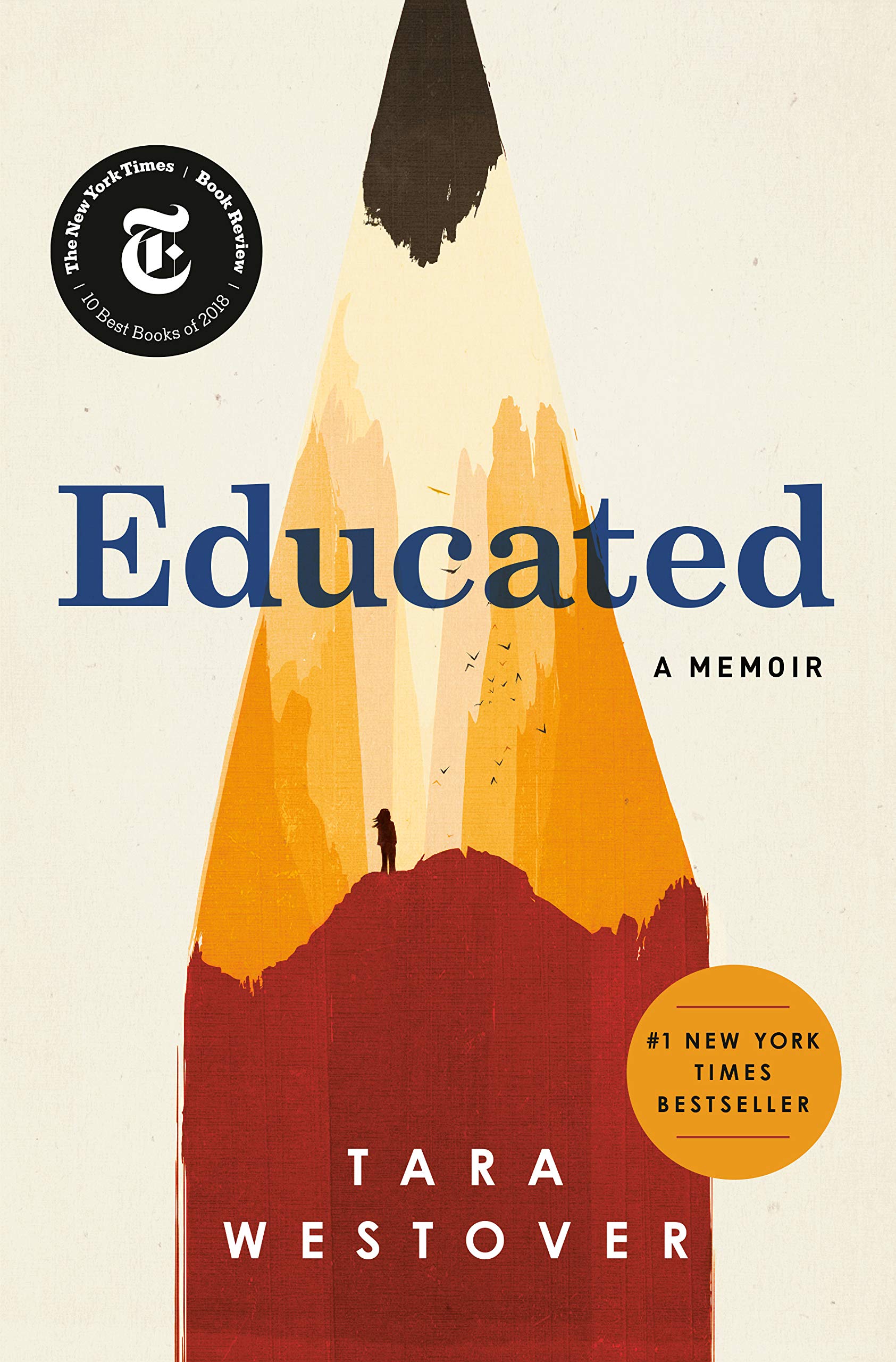
Educated by Tara Westover Westover’s memoir of being raised without a proper education by doomsday preppers in a pseudo-cultish Mormon church may not be the first thing you think when looking for a good quarantine read, but speaking as someone who was also raised by preppers, no one better gets the dread of the end of the world than kids of preppers. We grow up thinking the end of the world is around the corner, and sometimes, there’s a sense of relief when disaster comes. You can finally stop being vigilant for it. At the same time, no disaster truly is the end of the world. You keep living. I recommend this book since the narrative is full of hope and overcoming, and we could all use someone to root for right now.
The Light Between Oceans by M. L. Stedman In this historical novel, Tom Sherbourne keeps a lighthouse on an island alone until he meets and marries Isabel. The two try to conceive, but they suffer two miscarriages. One day, a baby washes on shore in a boat, like an answer to Isabel’s prayers. She convinces Tom not to alert the authorities, and they raise the child for a few years. Eventually, they have to face decisions about their daughter’s true parentage when they return to the mainland. While I’m stuck at home for fourteen days, I still have access to a slew of apps to reconnect with the world and loved ones. I even had a friend drop of groceries for us yesterday. Stedman’s novel give us a look at true isolation, cut off from the world and support, and what we may be willing to do in our grief.
Silence by Shusaku Endo I would recommend this book out of the current climate as well. Endo’s historically accurate depiction of Jesuit priests in Japan during a time of great persecution to Christians addresses questions of theodicy (a theology about or defense of God in the face of suffering/evil) and faithfulness. Right now is a true test of faith for many. It’s easy to trust God and believe in His love when all is well, but right now, jobs are in question, food is in question, and even lives. We have to wrestle with all of this, and I think Endo sets the way for us.
The Chosen by Chaim Potok I’ve reread this classic so many times, and it always strikes me anew. Silence and isolation are major themes, and the use of both in building empathy. My idea of friendship has been largely shaped by the main characters Reuven and Daniel and the intentionality in which they pursue each other. They’re from different Jewish sects, and they have to navigate various tensions placed on them both. It’s heart-warming, humanizing, and oddly riveting.
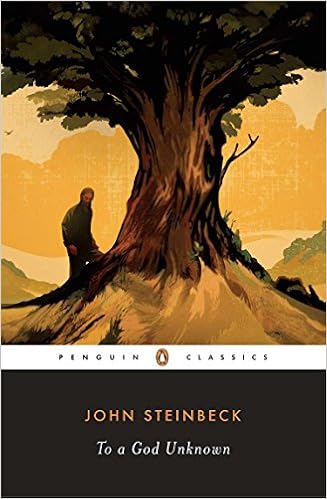
To a God Unknown by John Steinbeck I love Steinbeck as much as a Mumford, so I’m also recommending this shorter one as a gateway to some of his longer novels. The need for community and a connection to the land, common themes for this author, drive this story. Joseph Wayne travels to California to start a homestead and invite the rest of his brothers out. On his journey to the West, he hears about the “dry years” that can plague farmers out there, but he doesn’t believe those years will return. Once there, he finds a rock on his land that he believes is the sacred source of life in that region. As he invites his family and marries a local teacher, he struggles to maintain the source of life. Again, there’s a dread in this book that resonates but also a tenacity of life.
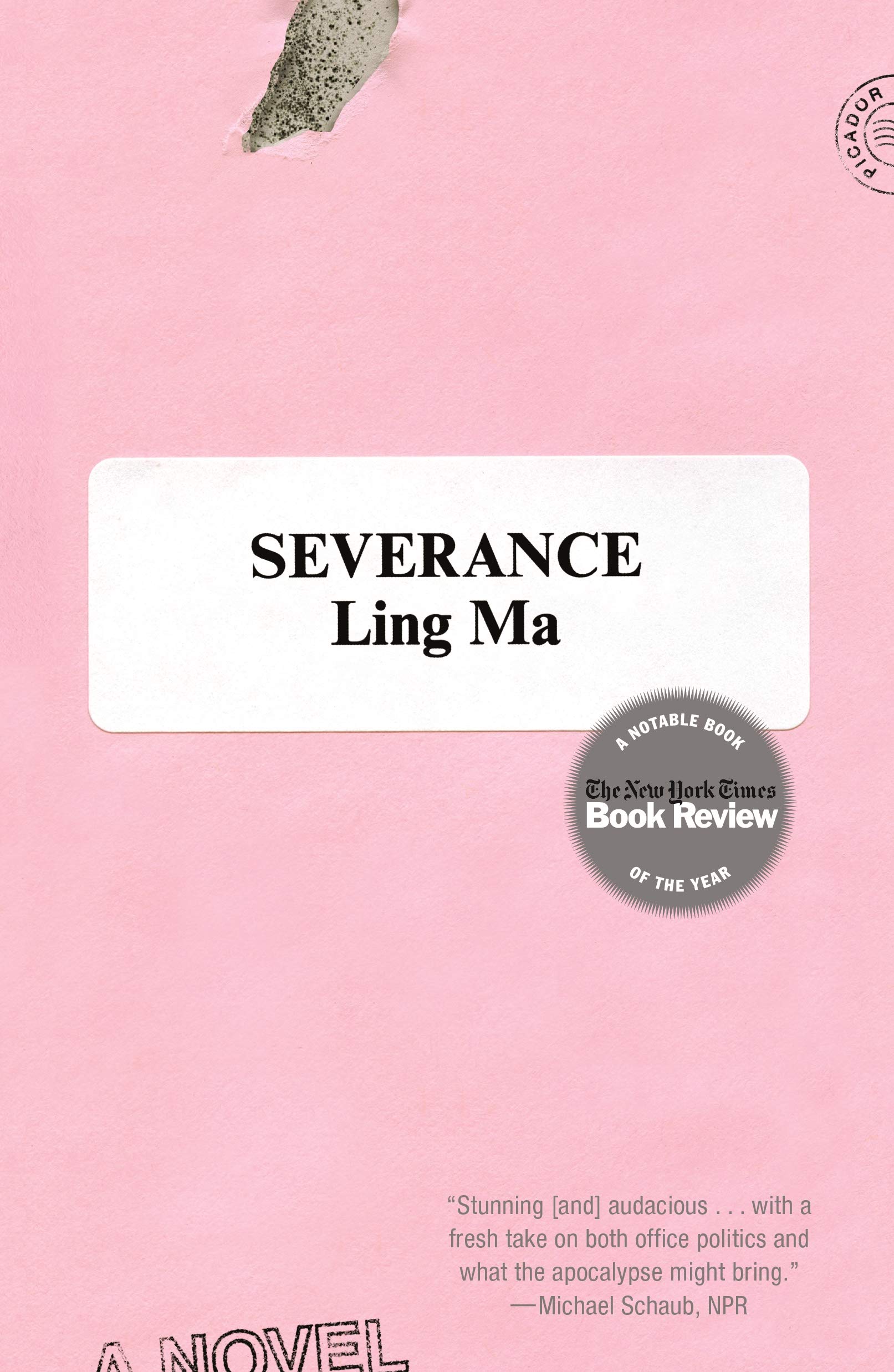
Severance by Ling Ma When Googling this book just now to grab an image of the cover, I found multiple articles suggesting this book for quarantine read lists and quite a few hailing it as prophetic. As an example, the headline for an article in Vulture is, “Severance Predicted the Slow-Burn Pandemic of Our Pandemic.” Others agree. In Ma’s novel, a flu begins in a Chinese factory and slowly spreads throughout the world. Candace Chen works for a company that employs the factory to print Bibles, so she is alerted first to the growing problem. Slowly, things shut down as the flu turns those infected into psuedo-zombies who are cognitively impaired and mindlessly perform patterns on repeat. Since COVID-19 first came to Kentucky, scenes of Candace Chen in an empty New York City began playing on repeat (much like Frozen 2 in most homes right now). Though the zombies are never hostile or malicious, the “slow-burn” of a capitalist society collapsing and everyone becoming isolated truly filled me with horror. I finished that book disturbed. I cannot imagine why anyone would put it on a quarantine read list now. It’s relevant, yes, but too relevant. I may like books that express my current mood, but this one would exacerbate anxiety and fear to an unhelpful degree. I recommend waiting to read this book until our current pandemic has passed (but then I totally recommend giving it a read!).
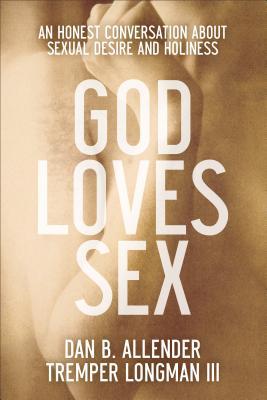
My interest in this book came from reading another one by Dan B. Allender earlier this year. I have a lot of respect for his biblical approach to sensitive topics that require compassion and wisdom. When Lifeway gave me a coupon for their website, his name was the first I searched.
Though the entire book is about God’s perspective on sex, Allender and Longman unpack it with two approaches. In half the chapters, they give a careful commentary and history lesson on Song of Songs; in between each of those chapters, we read a fictional diary of a new Christian who’s studying the book in a varied group from all different stages of life. At first, I cringed at the idea of unwrapping this topic in a fictional way (though I adore fiction, clearly), as it seemed like a cheap tactic, but I found myself unwillingly compelled by the character.
Sex is complicated, and the church’s response has been prudish, historically speaking. There’s a church tradition that Song of Songs is not about sex but is instead an allegory about God’s love for the church. This book addresses how and why that idea came about and subsequently shows its error. It’s a pervasive idea. I even heard it as a kid. This idea robs us of a much needed celebration of sex as God intended it, and it assigns physical or sensual things to a place below spiritual, as though they should and could be separated.
So, in a world that either idolizes sex or trivializes it and never speaks of it or speaks of it too openly, it was instructive to read an open discussion on the topic and even see a biblical model for finding that balance.
Before I got married, I sat down with Song of Songs, a big commentary, and a journal. I highly recommend any engaged person do the same. The commentary I used argued that the entire book was telling one story, but Allender and Longman believe it’s a series of individual poems, related only in topic and some repeated themes. From my inexperienced exegesis, I think both have valid arguments, and neither approach needs to harm the point of the book.
The authors do not force any aspects of sex into Song of Songs that aren’t there. They unpack what the Bible says without trying to drag it into any modern debates. They do, thankfully, spend some time on desire, beauty, sexual play, and rest, and then they use some of the struggles within Song of Songs to unpack the way our cultures and our families can make intimacy a struggle.
I would recommend this book to any person wanting a healthy, biblical approach to sex, but I would caution those not ready to have sex to wait until an appropriate time. As the Beloved says to the daughters of Jerusalem:
In the last month, I have read six books. I didn’t realize that until I checked to see which book I’d write about in my new review. Well, what a good summer so far!
Since I’m that behind, I’m gonna do a review dump again. It’s probably unfair to most of these books, especially the brilliance of Severance and the trash of Shades of Milk and Honey, but I’ll try to be more consistent with the next book I read.
So, here they are in the order I read them:
Oathbringerby Brandon Sanderson This third installment of Sanderson’s Stormlight Archive is the longest book I read this year. Whereas Moby Dick was 206,052, this chunky boy was 454,440. I only attempted it because I knew I’d be sitting on a beach for a week, and I could knock it out without setting back my reading challenge. I’m glad I did. Even after reading enough to worry about eye strain, I wanted more. Sanderson’s worlds are always compelling and his endings so satisfying. I will admit that I doubted him at one point. The obstacles and debacles seemed hopeless, and I worried I’d wasted days for a book that end with a promise of fixing it all in the next book. The ending blew my mind. Sanderson, after all this time consuming your novels, I’m so sorry I doubted you.
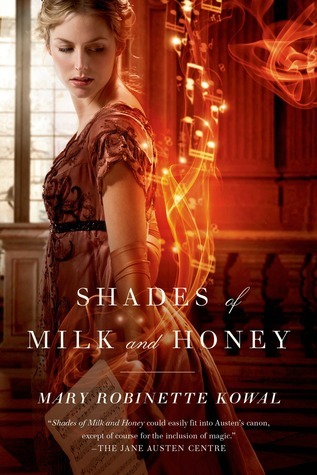
Shades of Milk and Honeyby Mary Robinette Kowal I hated this book, but I really didn’t want to. A friend had recommended as “Jane Austen but with fantasy.” Since the same friend also strongly recommended Oathbringer, I still trust her taste. A lot of the Goodreads reviews had warned that this was nothing like Jane Austen. Well, I don’t expect anyone to be as good as Austen except the mastermind herself. The problem, however, is when an author herself is trying to model her writing after Austen. In both style and plot, Kowal’s writing felt like a fanfiction crossover of all Austen’s novels and a vague magic system that served more as an excuse for writing the novel than anything worthwhile. Where as Sense & Sensibility‘s Elinor Dashwood is an example of a big heart ruled by wisdom and restraint, this novel’s character (whose name is Jane, because of course it is) is ruled by self-pity and occasionally petty envy of her prettier younger sister. I did not want her have her happy ending.
The Signal and the Noiseby Nate Silver In Logan’s list of books that shaped who he is, this non-fiction work is in the top five. So, I started reading it last year to understand why it was so important. It took me six months to finish, and even then, I decided not to read the last two chapters when I found out he didn’t read them either. Don’t let this take away from the 4 out of 5 stars I’d give it. He just suffers from the John Piper Syndrome of making your point too many times. The first half of the book analyzes our modern problem of Big Data, how all the noise sometimes drowns out the signal, and the tendency of some industries (looking at you, housing bubbles) to abuse the system. Halfway through the book, he introduces a philosophy of educated guesses. The second half of the book, then, is observing a variety of forecasters that already incorporate (knowingly or not) this philosophy.
Homesicknessby Jesse Donaldson Part-memoir and part prose-poems, this memoir is a meditation on Kentucky and nostalgia. Donaldson uses an entry for each of Kentucky’s 120 counties to tell a story of his love for this state but also the love for his wife which compels him to stay in Washington. I enjoyed reading of a relationship with my home that resonated in surprising ways. Does everyone miss their home state like this when they leave it? I grew up feeling restrained by these bluegrass hills, but after calling another state home for a brief time, I came home to Kentucky with the same affection and fondness Donaldson describes as a lifelong state of being. I recommend this to anyone with a connection to Kentucky.
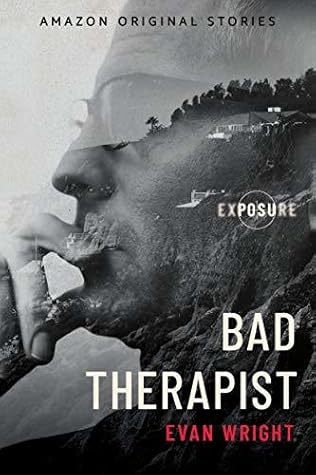
Bad Therapistby Evan Wright So many trigger warnings should precede this book. Wright’s exposé of Chris Bathum will haunt me for a long time, as well it should. Bathum’s crimes, including insurance fraud in the millions and licentious, evil treatment of the patients who idolized him, were made possible by loopholes in our system that still exist. The bravery of Rose Stahl, his patient and employee, in exposing him and cracking open the case will also serve as a shining example of doing the right thing even if it puts your life at risk. I listened to it slowly as an audiobook, and I’d recommend the same for anyone who might need to take a break from this dark story of wickedness and villainy.
SeverancebyLing Ma Of all these books, Ma’s debut novel is most deserving of its own post, especially as it’s hard to describe succinctly. The journey of Candace Chen, an average millennial and child of immigrants, is told in chapters alternating between her arrival to New York after college and also in a future time after the end of the world. The apocalypse comes as a zombie-esque virus, but these zombies aren’t the brain-eating type. They are merely stuck in routines, performing the same rites and duties and jobs without sleeping, flinching, seeing, or speaking. As Candace herself is prone to routines and reliving the past, the line between the “fevered” and the narrator is blurred. Ma’s prose is perfectly paced so that it never felt rushed and never dragged, never too heart-racing and yet hard to put down. She critiques capitalism and American industry without verging getting political. As a girl who works in an office and lives in a city, I found this narrative to be more terrifying than any other post-apocalyptic story I’ve read. It’s the new The Road.
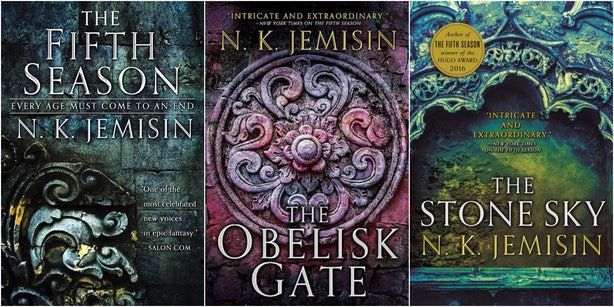
Over a week’s vacation at the beach I read the fantasy trilogy that Tori purchased on our anniversary, which she reviewed here. Instead of writing a blog post about the trilogy as a whole, I want to write a post about each of the books. This is partially because I would like to write about the second and third books without concern regarding spoilers, partially because I want to reflect on each book individually as well as with regard to its place in Jemisin’s overall story, and partially because I use the individual blog posts to actually count how many books I’ve read this year, (not counting some things for classes) which Tori uses Goodreads to do.
The Broken Earth Trilogy is a fantasy series with several bold decisions. It is a genuinely post-apocalyptic entry into the fantasy genre, a choice which I think has inherent risks but gives considerable payoffs here. Jemisin writes one of the perspective characters from a second-person point of view, a move that helps the audience relate to a character who is not the usual fantasy novel protagonist, and also permits a fair bit of distinctive, clever prose. That identification and relation is significant also because of another bold choice Jemisin makes; that is, her chief protagonist is a middle-aged woman of color with two children and a lot of trauma. While most characters in this world are not caucasian, the world is so far removed from our own that patterns of oppression and subjugation flow in ways related to its magic system, but the connection should not be missed.
This is a book series with a lot of hurt people trying their best to make it through very difficult situations alive. For that reason, it is a series that explores pain, shame, and suffering. This is a series of rage. If seeing the raw anger and brutality of the oppressed makes you so uncomfortable that your ability to relate to people in hard positions, this is not a series for you. Otherwise, I hope you dive in.
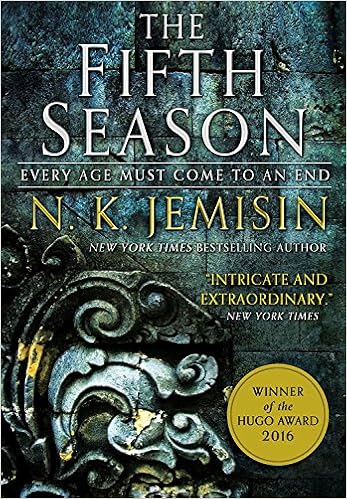
The Stone Sky is Jemisin’s lead-in into the Broken Earth. It follows three women of different ages, all of whom are connected to Orogeny, the magic of Jemisin’s world. Essun, the aforementioned middle-aged mother, flees her home on a hunt to try to find her husband and daughter in the shadow of a continental-scale catastrophe after years of hiding her magical abilities in order to live among normal people. Syenite is a professional orogene, controlled by a centralized authority designed to utilize the benefits of the powers orogenes possess while also keeping the population from brutally killing them all in bigotted protest. Damaya is a young child entering the control of the same organization, displaying the disturbing mix of loyalty and cruelty it shows those in its care.
These three characters give insights into not only the excellently built world Jemisin has constructed, but also into the dynamics of oppression and subjugation. Orogenes, called “roggas,” by those who are unsophisticated enough to use an impolite term, are systematically excluded from the broader humanity because of a mixture of fear and irrational hatred. Those that are hiding among others are killed by mob. Those who enter the control of the Fulcrum have every aspect of their lives dictated to them by its power structures, where they go, what they do, how they behave, and even who they have children with (Sexuality is a topic given significant attention in this book. Scenes made me blush, but are rarely crass, though for sure this is not a book I’d want in the hands of a child or most teenagers.).
All of this takes place as the world ends. The first pages show that despite humanity’s attempt to survive the endless, chaotic patterns of destruction arising from turbulent, dangerous underground activity, they are not prepared to survive this last disaster thrust upon them. This fact recontextualizes all of the dangers and cruelty and desperation and fury into something deeply poignant.
The characters in this book will stay with you. Alabaster, an orogene of unprecedented skill and ability, never stops giving wry, tortured commentary on the absurdity of the world around him. Crack, a peer of Damaya, reveals with alarm the depths of the damage people do to each other, how that warps their conduct, and also how that kind of hurt is always bound up in greater, darker systems of injustice. Hoa, a young child Essun meets along the way is nothing at all short of a spectacle and oddity in and of himself.
Jemisin’s work in the Fifth Season is one of reflection, catharsis, but most of all unflinching examination of what it means to be human when the world around us is wrong.
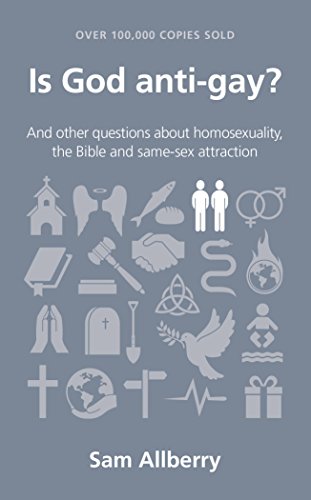
The Questions Christians Ask book series is a series of short, simple, helpful books for providing clear and orthodox answers to questions that Christians and others have regarding their faith. It includes other entries like, What makes us human?, Why did Jesus have to die?, Where was God when that happened?, and Is hell for real?, among many others. Sam Allberry’s contribution to this series is a matter of special significance and expertise to him. While going through scripture to attest to the Church’s historic position on sexuality, he weaves in his personal experiences as a pastor and same-sex attracted man in a way that informs his entire public ministry. With many close friends who identify as gay, lesbian, or otherwise, his insistence on practicing humility and asserting the human, God-created dignity of these friends is all that’s needed to see why he has been the most significant thinker on this issue among evangelicals for years.
True to form, Allberry begins Is God anti-gay? on the surest possible footing: exploring what the Bible says not about homosexuality, but instead human sexuality. By locating the doctrines regarding same-sex attraction, acts, and relationships inside the larger docrines of sexuality, humanity’s special creation by God, and Creation in general, Allberry roots his book into streams which are capable of helping Christians give life to those in need, not only rebuke or harsh words, as less careful and pastoral figures have done who have taken up this topic.
This work done, Allberry devotes his four remaining chapters to four key assertions:
The Bible is unambiguous that sexuality is reserved for monogamous marriage between man and women.
That there are good ways for Christians who experience same-sex attractions to live out their lives in dignity, satisfaction, and full obedience to God.
The church must work diligently to support those who struggle because of their sexual attractions, comfort those who face unjust brutality because of their attractions, and stop putting special priority on homosexual attractions and desires such that they outpace the work of the church.
That Christian individuals ought to work hard to let their unbelieving friends who are gay, lesbian, bi-sexual, or otherwise know that they love them and are for them while also speaking prophetically into the world to call all to the gospel of Christ.
All four are argued on the basis of the Bible and the human dignity that is revealed within its pages. I won’t retrace each of the arguments here, but I will say that I find Allberry’s work on each of these points entirely remarkable for the significant space constraints he is operating with.
Allberry’s eyes never drift far from the gospel that Christ came into the world to bear the weight of our sin, disorder, and death on himself so that those who turn to him might live free of these things. As a result, he speaks with a mutually reinforcing clarity and optimism. For Christians struggling to make sense of what God says regarding human sexuality, or unsure of how they ought to love their neighbors in this sense, or deeply bothered by the failure of their local church to love those affected by this issue, this is a crucial and worthy starting point.
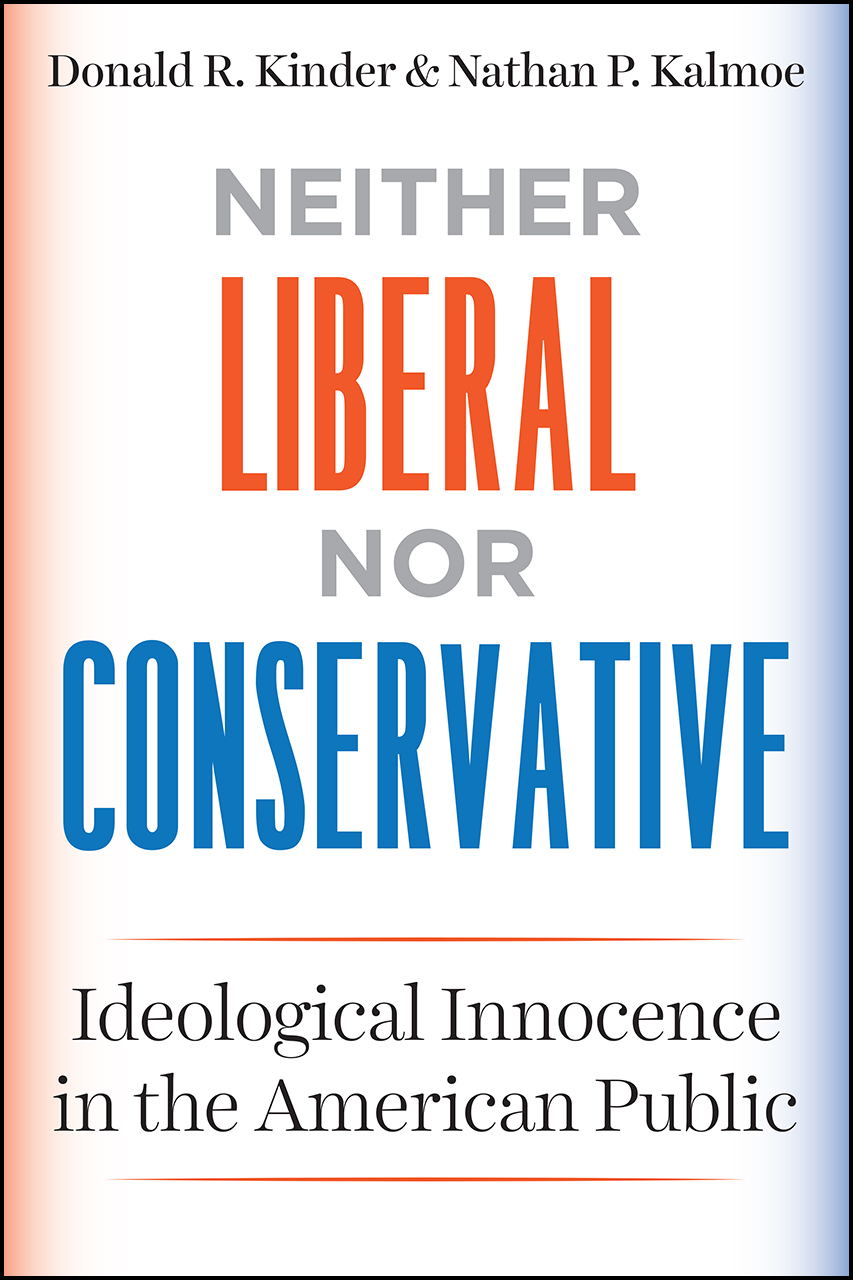
A lot of ink gets spilled on ideology. Articles show that Congress has divided itself into patterns of ideological gridlock so tightly that it can’t achieve most popular policies. Pundits proclaim that radical liberals or conservative extremists are dangerous and out to destroy what makes the country great. Internet threads invite their members to look down on all of the masses of ignorants brainwashed by whichever ideology they find most distasteful. But what if the masses didn’t have an ideology at all?
This book has a simple argument, which it efficiently and tightly devotes its relatively short length to arguing: The overwhelming majority of people in America (and most democracies) have no strong ideological allegiance. While this may seem counterintuitive, I found their evidence compelling, and perhaps even overwhelming.
Using a number of clever analyses of data about American citizens, Kinder and Kalmoe uncover the reality that somewhere between 80% and 95% of the public lack the features of ideology in their thinking. Ideology is a cognitive organization of beliefs so that instead of viewing the world piecemeal, individual issues become part of a larger, more significant whole. As a result, views of ideologues on issues are linked together by this mental organization, are relatively stable over time unless their ideology changes. In other words, ideologues are consistent and stable in their beliefs.
The book’s first chapter shows that this describes a very small number of people. The rest of the book shows why that would be while simultaneously defending the claim against alternative explanations of the data. Over the course of the book, the authors note that ideology is a complex mental task that requires strong motivation and access to a lot of information. In fact, ideologues of all varieties, whether liberal, conservative, libertarian, or socialist, are almost always considerably more informed about politics and current affairs than their non-ideological counterparts. KInder and Kalmoe note that this explains why so many assume that everyone is ideological: the individuals who devote themselves to politics and the news are the individuals we see and hear about, and so their ideological stances take on a higher profile than is warranted by how common ideology actually is.
In the process of analyzing a huge amount of data, Kinder and Kalmoe discover another explanation for the appearance of ideology: partisanship. While noting that ideological preference is a weak predictor of who a person will vote for in a Presidential election, party identification is a very strong predictor. In other words, for as long as we have been keeping data on the subject (since about the 1960s) we have seen that liberal Republicans will vote for conservative Republicans before they will vote for a liberal Democrat that shares more in common with them on policy proposals. The same is true of conservative Democrats.
When you take into account the vast majority of people who have no ideology to speak of, political parties take on an even more dominant role in their political thinking. Without having strong personal insights into politics and current affairs themselves, most people rely on the real organizations that they have aligned themselves with, often donate money to, and which have real presence in their communities via local party chapters and campaigns. In other words, parties are real and personal, while ideologies are abstract sets of words. Parties determine how people vote far more than ideological identification. It also determines their affections: Republicans dislike Democrat public figures (and vice-versa) far more intensely and consistently than people who can be categorized as conservatives dislike liberals (and vice-versa).
In fact, the data in the book suggest that when people in America say that they are conservative or liberal they actually are using that word to reflect their partisanship on the basis that the high-profile members of that party use ideological words when talking about public affairs, even if they themselves don’t have a strong grasp on what those figures mean in those moments.
This sets up the duo’s conclusion, that because ideology is fundamentally a fruitless measure of public electoral behavior, the entire political science community should shift to other analytical categories. They suggest group identification as the most important factor in electoral behavior, arguing that, like political party, identifications with a religion, race, ethnicity, or profession are the sort of concrete, solid proxies which individuals without ideology are likely to use as proxies for their decision making.
This book was illuminating for me. I think I often have associated the word, “idealogue,” with categories of simplistic views of the world, ignorance, and animosity. This was on a gut instinct which said any kind of one-dimensional view of the world had to be ignoring huge swaths of nuance. I believe this is still often true, but I must also concede that the project of an ideology requires a larger inner, intellectual infrastructure than our public discussions often want to give it credit for.
This does fit with an observation I had quietly ignored for the past several years: most of the best informed people I knew appear to be the most ideological in their understandings of that same knowledge. This fact especially imprinted on me when I was young because most of the well-informed adults I knew when I was young were very conservative. With a lifelong curiosity about politics and government and the news, I also tended to be conservative as a result. Ideology was never my highest commitment, however, and while I suspect that the ways my views on policy adapt to my religious beliefs might imitate aspects of ideological thinking, it is not, strictly speaking, an ideology.
This is a heavy social science book. If you are very curious about the claim it contains, check it out. Kinder and Kalmoe are very thorough in documenting their approach to interpreting data to arrive at their conclusions. If you’re comfortable accepting the book’s claim on the grounds that it is verified by experts using sound data-analysis approaches, feel free to pass.
A little less than a month ago, Logan and I went book shopping on our anniversary. He’s already written a blog on the book he picked (and a few others since then), but I’ve been taking my sweet time working through 1424 pages of character-drive science fantasy. I had walked into our local bookstore looking for a series, a trilogy, a world that didn’t kick me out after one book. I found this boxed set, and though it won three consecutive Hugo Awards (the first in the genre to do so), a Nebula Award, and a Goodreads award, it was this quote on the side that convinced me to buy it, “If you read one sci-fi series this year, it should be The Broken Earth.”
I have to say, I agree. You’ve never read anything like this, because there’s no fantasy novel like this. So many of the narrative choices, the characters, and the world itself all come from a voice that I have yet to experience in this genre: a black woman. I mention this not because being a minority alone is a merit, but because in a genre where we want to explore new worlds and new ideas, we’ve been pretty limited to those ideas coming from one demographic.
On top of which, Jemisin’s background influences the vivid world-building in her novels. She uses themes of oppression and racism in a way that’s simply skillful if that’s all you want and yet deeply relevant if you’re looking for it. She also has powerful female lead characters, with rich three-dimensions (no four-dimensions (no, five!)).
And that’s really what I want to spend the most of this piece talking about. What I loved about this series and what will truly stay with me for a long time are the characters, especially Essun. The narration of the Essun is given in second-person, a perspective I was strictly told never to use in my creative writing courses. Yet Jemisin uses second-person masterfully in a way that never feels gimmicky and allows us to explore the character on new levels (I can’t say much more than that without spoilers).
Jemisin expects her readers to be smart, as well, which I appreciate. Often characters will put something together, and though we are told about their jolt of surprise in understanding, we are not always hand-fed what they’ve figured out. The world-building is done in much the same way, but that made for a complicated reading experience for me.
See, though I have a lot to say about the series, it’s hard to talk about for a few reasons. Firstly, because of how she wrote it. The best way to explain it is to compare the experience with reading a Brandon Sanderson novel. For most Sanderson novels, we’re given a clear, concrete world. You understand what’s going on, and you love every second. The big twist at the end is when you’re given just a little bit of information to unlock a whole new layer that was there the whole time. For Jemisin, it’s more like holding the author’s hand while walking child-like through her world, and the twist at the end is finally feeling like maybe you know what’s going on (but probably not). This wasn’t un-enjoyable, but it did lead to my second complication.
I didn’t know how I felt about the series the whole time I was reading it. Actually, I didn’t know until right up to an hour ago. I would have moments of feeling deeply moved or surprised, but I kept wondering if I was missing something. I kept asking, “Is she a clever author, or is she over-reaching?” The real question should’ve been, “Am I reading a bad book, or am I failing to understand what she’s giving me?” It took me trying to explaining the ending to a friend who likes spoilers to realize just exactly how the whole system and world work together.
So, it took me a few days after finishing the series (which I did enjoy the whole time I was reading it) to definitively say: This series and author are brilliant and deserve very acclaim received.
In 2017, Jemisin was in talks to make it a TV series. Let’s hope that happens soon.
In my second foray into literary fiction for the year (Tori is insistent that I read more fiction) I chose a novella by a renowned Russian author known by most people for writing Lolita.Transparent Things is a brief exploration of the deep interconnectedness of things. The narrative is complicated and looping at times seems intentionally to want the reader to squint their eyes and ask themselves whether some briefly mentioned fact is in fact referencing an earlier event or character. Many times it is indeed, but just as often Nabokov is weaving a holistic metaphysics in this story in which nothing is arranged by chance, or even purely by motivation, but entirely by the comprehensive story.
Transparent Things is, in a sense, about Hugh Person’s stay in a hotel. The some hundred pages are filled out by a dive into the depth of reality offered by both Person’s person and the objects around him. The opening chapter explains it better than I can, so to quote from it,
“When we concentrate on a material object, whatever its situation, the very act of attention may lead to our involuntarily sinking into the history of that object. Novices must learn to skim over matter if they want matter to stay at the exact level of the moment. Transparent things, through which the past shines!”
This paragraph sets forward not necessarily the work’s premise, but it’s central idea, that the past and present, set apart from the future by their realness, are inextricably linked. To hold a pencil, as Hugh at one point does, involves him in a long history of graphite mixing with clay, with laborers and machines and cutting, trees, saws, blocks, and all that the pencil has written. Nabokov at times seems to play with the reader, throwing them down the rabbit hole of the infinitely-expansive past contained in a moment and then sharply tugging them into a particular later present in which participates in the past we thought we were examining in the narrative. The first several times, this results in a raised eyebrow and maybe a satisfied (or unsatisfied) sound of comprehension. This effect becomes potent and even tragic in the book’s climax, however, when a mundane moment is revealed to be the basis of something altogether more tragic.
That explained, I don’t want to give the sense that Transparent Things is a novella about time or memory in the way that The Book of Collateral Damage is. It is not. Nabokov is instead writing a novella about something which I find altogether harder to grasp for more than a tenuous moment before it fades away like a mist. Comments get worked into the prose which suggest that the act of writing is itself the pursuit of these transparencies of reality, where reality shines through by eclipsing other reality. A chapter towards the end contains a paragraph on the nature of writing a character, that they don’t seem to truly be the author’s, but instead are bound together in their fates and free choices (which are not entirely separable) with only the faintest, breathy, dream-like interference from the author possible.
Transparent Things is something of a love story, but of the sort of kind which feels particularly Russian for some reason. The love is given only some room amid all the book-editing of the main character and the past-exploring of the author. It is more like a universal tragedy. As soon as the opening pages were written, or, if you like, as soon as the characters were born, it appears as though nothing other than a very particular doom could ever have awaited these characters.
Further exploration of a novella this tightly woven is for someone more skilled in literary criticism than I am. Still, this is another book I can strongly recommend for anyone who likes thinking in free, abstract ways, fond of repeated motifs, are interested in book publishing, or who would like to enjoy a kind of tour of a small Swiss town in a hundred pages.
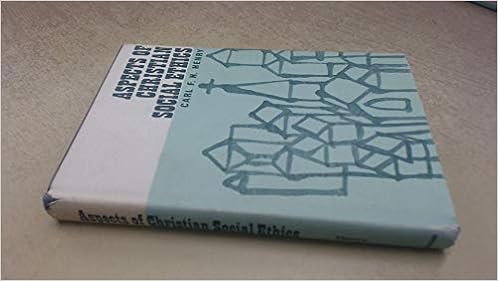
Before reading Aspects of Christian Social Ethics, I had often heard the name of Carl Henry in passing conversations. Attending the Southern Baptist Theological Seminary results in hearing names that I rarely, if ever, hear in other settings. I don’t mean the names of prominent figures of Church history that might be discussed among any group of faithful and well-read believers, like John Calvin, Augustine, or George Whitefield. I mean instead a group of people who are known by my fellows because of their particular influence on not only our particular tradition of Christianity, but even particular faculty members and notable alumni. Henry is one of the figures of the past with this sort of notoriety at my school. His writings have been influential on Russell Moore and was the topic of a book edited by Provost Matt Hall. It was for these and several other reasons that I was very interested in reading Henry’s brief collection of lectures concerning how the church ought to related to its broader cultural context.
Henry was well-suited to give these lectures and publish them. He was a professor of Philosophy and Systematic Theology and gave a great deal of time and energy to considering how Christians should apply the truths of God’s word to doctrine, thought, personal ethics, and public conduct. By the time he published this book in 1964 he was a leading figure among mid-twentieth century Evangelicalism, though he had not yet gone on to publish his magnum opus, the six-volume God, Revelation, and Authority.
Aspects of Christian Social Ethics contains five lectures edited into essays and an appendix on “Christianity and Revolution.” The opening chapter, “Christianity and Social Transformation,” attempts to delineate methods by which any group may attempt to change their society and choose among them for the church. He argues that they may be divided four ways, though admits that the division is a touch arbitrary, into Revolution, Reformation, Revaluation, and Regeneration. While evaluating and illustrating the commitments and consequences of each, he concludes that the Christian church must hope for the regeneration of society by the power of the Holy Spirit and forsake the other methods of change.
Revolution, he argues, relies on brute force to achieve a deep and fundamental change of the status quo. With the Bolshevik and Chinese Revolutions clearly on his mind, he also asserts that it has an inherently anti-theistic bent. In any regard, however, he sees its violence and autonomy as contrary to Christian teaching. Reformation, the hope of changing society by changing the social environment gradually through education and legal action, is the face of a coin shared with revaluation, the independent hope that by communication of values will cause individuals to take better actions. Both fall short of recognizing how desperate the human condition is and by asserting a power of change independent of God. Reform is especially undermined by its deep need for contact with the status quo, thus losing the ground of its own normative assertions for change.
The failure of these is not that they are always necessarily wrong, however. Rather, they fail because they lack a transencent basis for moral authority which allows critique of the status quo and also regulates their own actions. As Henry concludes, “The Christian movement has a stake–a vital stake–in education and legislation. It need not disparage every effort at reform and revaluation as abortively competitive… Yet Christianity knows–and it dare not forget nor let the world forget–that what the social order most needs is a new race of men–men equipped not simply with new textbooks and new laws, but with new hearts.”
The second essay, “The Christian View of Work,” is more connected to work as the intersection of inner personal piety and our greater social environment. Henry argues that the work of a person is not chiefly to be a way of securing their personal sustenance or for enriching their employer, but instead an act of creation. Work is thus a calling, in every individual is to use their talent to join God and serve God by serving others. He notes that the early church would add their manual labor jobs to their tombstones, an unusual behavior for their Roman context, and concludes that they did so because of their grasp of the biblical teaching of work.
He mourns alongside the average worker who feels alienated from the goodness of their work, making the connection between fallen, fruitless labor and a fallen, futile world. He then chastises Christians for indulging the same feelings, however, because of the glorious nature of their work. He admits that some innovations of modern capitalism make grasping the true nature of work difficult, specifically giving attention to the possibility that Christians ought to oppose the assembly line. Nevertheless, Christians ought to recognizes that God is well served and perhaps even human lives are saved by something as mundane as properly tightened screws.
He explores the obligations which employers and employees have to each other, that employers ought to pay well enough to enable creative, fulfilling labor and also provide a safe environment conforming to the dignity of the worker, and the worker ought to give their full effort and energy to the labor and not make demands based on coercion or deceit. He laments, “go slow,” policies and is wary of strikes, but commends a handful of labor unions actively organized on Christian principles of work. He finally concludes that a Christian must pursue excellence at their tasks. God is not a mediocre Creator, nor is a man allowed to be less than the best cook, photographer, teacher, or construction worker which he possibly could be.
The next two sections are essentially two halves of a single unit. Both bear the title, “The Christian Stake in Legislation,” with the first half dealing with, “Theoretical Considerations,” and the second dealing with, “Practical Considerations.” They both attempt to give grounding to the question of whether and how Christians should attempt to influence the laws of their country.
Quickly, he sets out that just as no form of governance can claim clear Biblical warrant, neither can almost any specific legislative proposal. This ultimately prohibits churches themselves from weighing in on matters of political significance, even if it is in pursuit of conditions in which the gospel may plausibly be more easily and freely preached. Rather, Henry envisions the church’s reaction to social ills as part of an expanded sense of evangelism. That is, he argues that the church’s main responsibility is always to proclaim the good news of Jesus, that his death and resurrection has atoned for our sins. That is not to say that such proclamation ignores injustices in the community. To the contrary, social injustice is every bit as much of the sin which must be repented from and atoned for by Christ, lest God pour out his wrath for it, as promiscuity, thieving, and murder. In this way, the Church does not establish or lend its support to specific proposals, but does zealously warn of what the Bible warns of, God’s wrath upon evil.
Christians, as distinguished from the larger church body, however, have special obligations for themselves. They owe a limited but sincere obedience to whatever state rules over them, whether they be just or tyrannical, restrained or totalitarian. They must resist laws which hinder the gospel or contradict their obedience to God, and they must seek to have full, informed opinion of their world and seek to best use whatever gifts of thought, insight, communication, or even power which God has given them to achieve righteous and good results in the world, both by reminding government of its limitations, for it is created to serve God, and in its obligations and duties for justice. He encourages Christians to resist inclinations to besmirch politicians as a class and to encourage their children to consider policy-making and politics as worthy a career as becoming a doctor or engineer, so long as it is done ethically.
In any case, Henry is insistent that the aim of believers must never be to secure sectarian benefits for themselves. Neither are Christians permitted to attempt to force through in law for all what is required of them. Such claims of power for the state are beyond what is appropriate for it. Rather, Christians ought to see to it that the activity of the state is concerned to the utmost with justice, the maintenance of order through equity in public life, so that the state regards all equally and gives to each their due. He is critical of those who claim, for instance, that civil rights was an issue of love and the gospel. For Henry, such a claim undermines not only the special focus of the gospel, but also the demands of the state. The love of the gospel is elective, given to its recipients despite their deep undeserving. In contrast, the state must be utterly impartial, and thus is the true and right basis of legislation like the Civil Rights Act, etc.
The last of the full chapters is an attempt to flesh out the distinction of justice and love in a section titled, “The Nature of God and Social Ideals,” in which Henry criticizes Protestant Liberalism’s frequent insistence on shaping public policy in terms of Christian love. This he says is a mistake which flows from an error of theology first and foremost because it is grounded in an assumption that love is the foremost of God’s attributes so that it relativizes all other of God’s attributes and actions. He documents this position thoroughly before asserting that this is an innovation, and that the Bible and church history have seen Righteousness and Love as coequal in God’s nature. God is sovereign justice no less than God is sovereign love. The result is that Henry imagines a scheme in which the government, tasked with the preservation of society and the restraint of evil, is tasked with a duty toward justice so that all receive what they deserve, where it is the Church, the new humanity created by Christ without any deserving on their part, which is free to dispense love freely. Law is benevolent, but it is distinct from benevolence itself just as justice is distinct from grace.
The book concludes with a brief ten pages devoted to taking an overview of the question of revolution in specific contexts of unjust and tyrannical rulers. Here, Henry asserts much less, and I got the feeling while reading it that this was because he had not yet made up his mind on some key questions. Nevertheless, several useful principles are established: Christians ought not to permit political murder, but instead seek whole unjust systems to be overthrown so that justice may truly spring forth. It is generally wrong to attempt to undermine civil authorities, and to do so must be on exceptional grounds. It is wrong for Christians to attempt to pursue revolution on the grounds of a state’s brutality toward themselves, but in such a case ought to pursue the proclamation of the gospel and accept persecution and even martyrdom glady.
Aspects of Christian Social Ethics is a book that, though I suspect is not widely available to most people, I wish many Christians would read. It is a valuable corrective to wrong ideas that arise from living in this particular cultural moment, and I found many of my own ideas being challenged and in several instances my mind changed entirely. To be a relatively old book, it is well written and easy to get through. It contains a great deal of wisdom and humility on the part of its author, which permits the depth of his confidence in the authority of Scripture to stand with inspirational clarity.
Translated from the Arabic by Jonathan Wright. 303 Pages. Begun 05/10/2019. Finished 05/12/2019
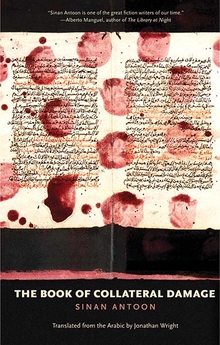
It has been a long time since I read a literary novel. Unless I forget something Tori has gotten me to read, this is the first since my senior AP English Literature class in highschool. I always enjoyed literary novels as a child and teenager, despite my first extended times of reading being spent on science fiction. Somewhere very early into college, though, my reading habits became focused on nonfiction and genre fiction, as my prior entries on this site demonstrate. Tori and I went to a bookstore at the start of this weekend, however, with the intention of buying two books each. It was part of our way of continuing to celebrate our anniversary, which is today. We read the rest of the evening and through yesterday together. I chose to buy this book for a number of reasons. It felt right that I should read a literary novel on our anniversary, because Tori dances in the world of beautiful prose written about things that somehow transform mundane things into art. It also has a beautiful dust cover, which immediately caught my eye because of my years of painfully trying to learn Arabic. The fact that it was a novel by an Iraqi author originally written in Arabic and translated also piqued my interest.
I bother to include this prelude not just because I want the world to know that it’s our anniversary today. The Book of Collateral Damage is a novel about moments, articulated instances where memory gives shape to something very real and tangible. This gives the book its form and the ground of its philosophical explorations. The moments that the book are chiefly concerned with are those of tragedy and formation.
Nameer, the book’s protagonist, is an Iraqi-born immigrant to the United States who, after his PhD work at Harvard, begins his academic career in Arabic Literature in 2003 in the wake of the beginning of the Iraq War. During a brief return to assist a documentary of the war consequences with translation, he meets an eccentric bookseller who is attempting to write an index of all of the casualties of the first minute of the Iraq War, an expansive project that mingles robust research with imagination. The two become friends and begin communicating.
At the intersection of Wadood’s mournful writing project and the American unease surrounding the Iraq War, is Nameer’s restless melancholy, which pushes him to explore New York City as he finds himself increasingly drawn into his own memories, even as he becomes obsessed with Wadood’s own project of reconnecting the world to its past. Nameer’s narration of his own day-to-day life becomes interspersed and mingled with entries from Wadood’s index, memories from his own past, their letters back and forth, and selected quotations about time, memory, and our relation to the past from Walter Benjamin.
What results is an opportunity to feel the horror of war, not from the perspective of the frantic soldier or the horrified civilian, but instead from the perspective of the memories which are forced into their resolution by an unknown terror. Ancient tablets, prison-made rugs, pianists, and birds all have their moments and memories resurrected at the same time that Nameer is finding his own memories of an estranged father, more distant past life in Iraq, school-aged exploits, and former lovers all asserting themselves on his day-to-day experience. The reader is free to see two men attempt, with incredibly varying degrees of success, to make sense of their own past and incorporate the men they’ve become as a result into their present realities in order to keep walking forward.
The poetry of Wright’s translation of Antoon’s ideas are at times breathtaking, and I was regularly moved to real sadness at Antoon’s way of crafting the abrupt endings of shattered lives. The ending is a remarkable and clever crystallization of what had come before that left me smiling but very sad. There are occasional moments when the past scenes become crude, but these are brief and only serve as articulations of the curiosities and confusions that guide us as we moved from our past selves into being who we are today.
One potential weakness of the book is its dialog. For the first two thirds of the book, nothing ever broke my immersion. Later, however, when Nameer begins having long conversations with non-Arabs, my eyes kept stumbling. I realized that the dialog written between Nameer and others from Iraq sounded like the English spoken to me by my Arab friends in general and my Iraqi acquaintances more specifically. There’s a brevity and forcefulness in grammatical construction, mingled with what sounds to my American ears like intentional ambiguity, which feels natural when spoken by Arabs that feels less natural when put in the lips of a Black woman raised in New York or a white man from Chicago. It took me some dozen pages to decide how big of a problem the dialog was before I decided that it was no problem at all. The narration is written in Nameer’s voice, and so too is the dialog that he reports to the reader. With this idea in mind, that these were his reports of what was being said, I coasted through and deeply enjoyed Nammer’s interactions with others as they guided him towards coping with his depression.
I would suggest that anyone interested in memory, time, Arab culture, language, the Iraq War, PTSD, or the pressures of an academic career read this novel. I found it so delightful that I now plan to return to literary novels a few times this summer. I haven’t very often read 300 pages in less than 48 hours, but the gravitas of Antoon’s prose and arrangement will pull you in for a ride. The book was published just this month, and while I write this, it appears there aren’t many reviews online yet, so you’ll have to take my word for it.